

SEO as a revenue line, not a rankings scoreboard
Where do your customers actually decide who to buy from? Nearly 87% of shoppers research a purchase online before they buy, and search engines are their top source for that research, ranked first by 54% of consumers according to PwC’s 2023 Global Consumer Insights survey. Even shoppers who end up buying in a physical store do this. Wunderman Thompson’s Future Shopper 2023 report found that 72% of consumers research online before an in-store purchase.
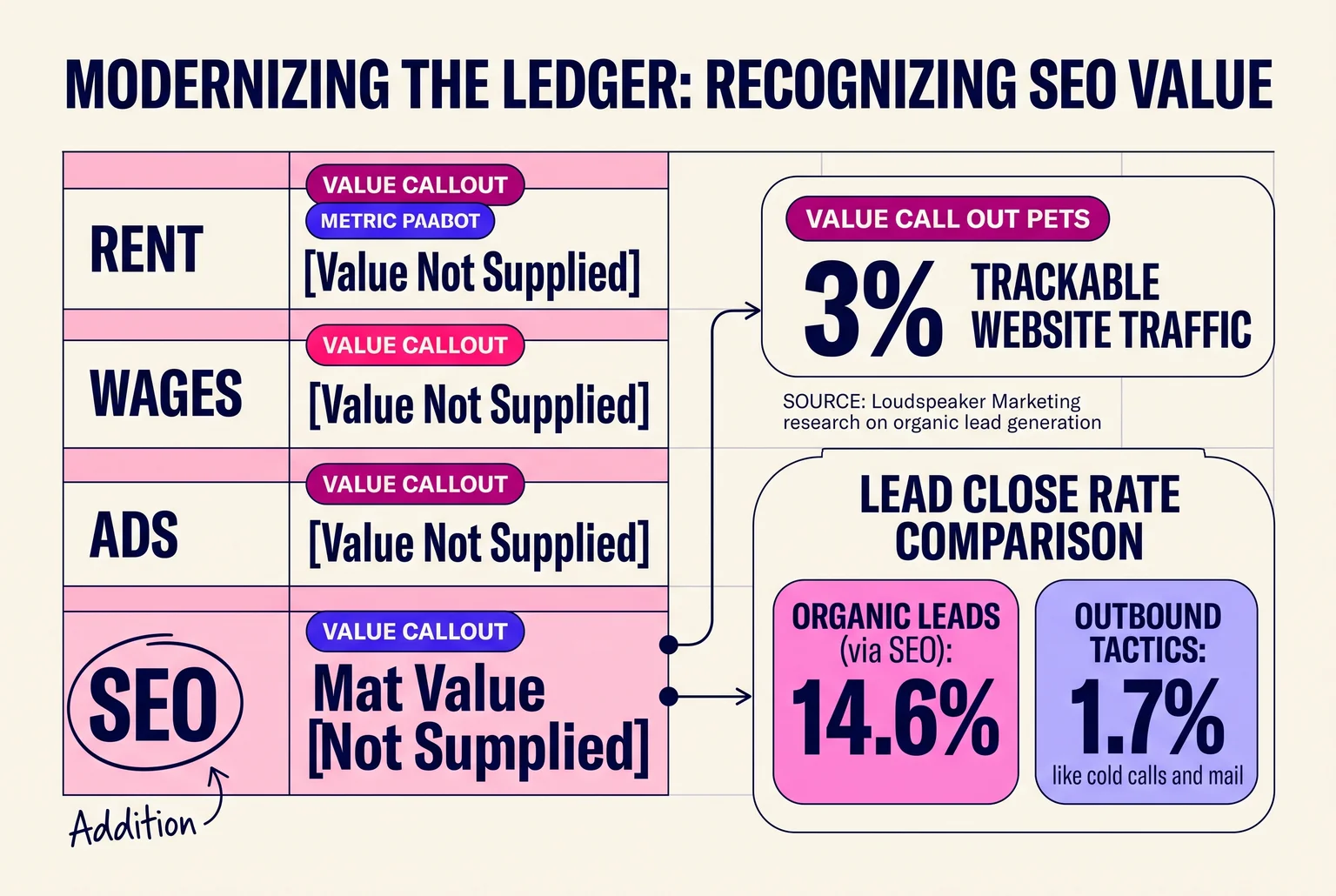
That means your Google visibility affects sales you never even see traced back to a click. Small businesses tend to treat SEO as a task for the website guy, something to tick off after the logo and the colour scheme are sorted. But organic search makes up around 53% of all trackable website traffic, and leads that come through it close at a 14.6% rate, compared with 1.7% for outbound tactics like cold calls and mail, according to Loudspeaker Marketing’s research on organic lead generation.
Numbers like that belong next to your ad spend and your rent, not buried in a to-do list.
Ranking one spot higher gets you clicks, not just bragging rights
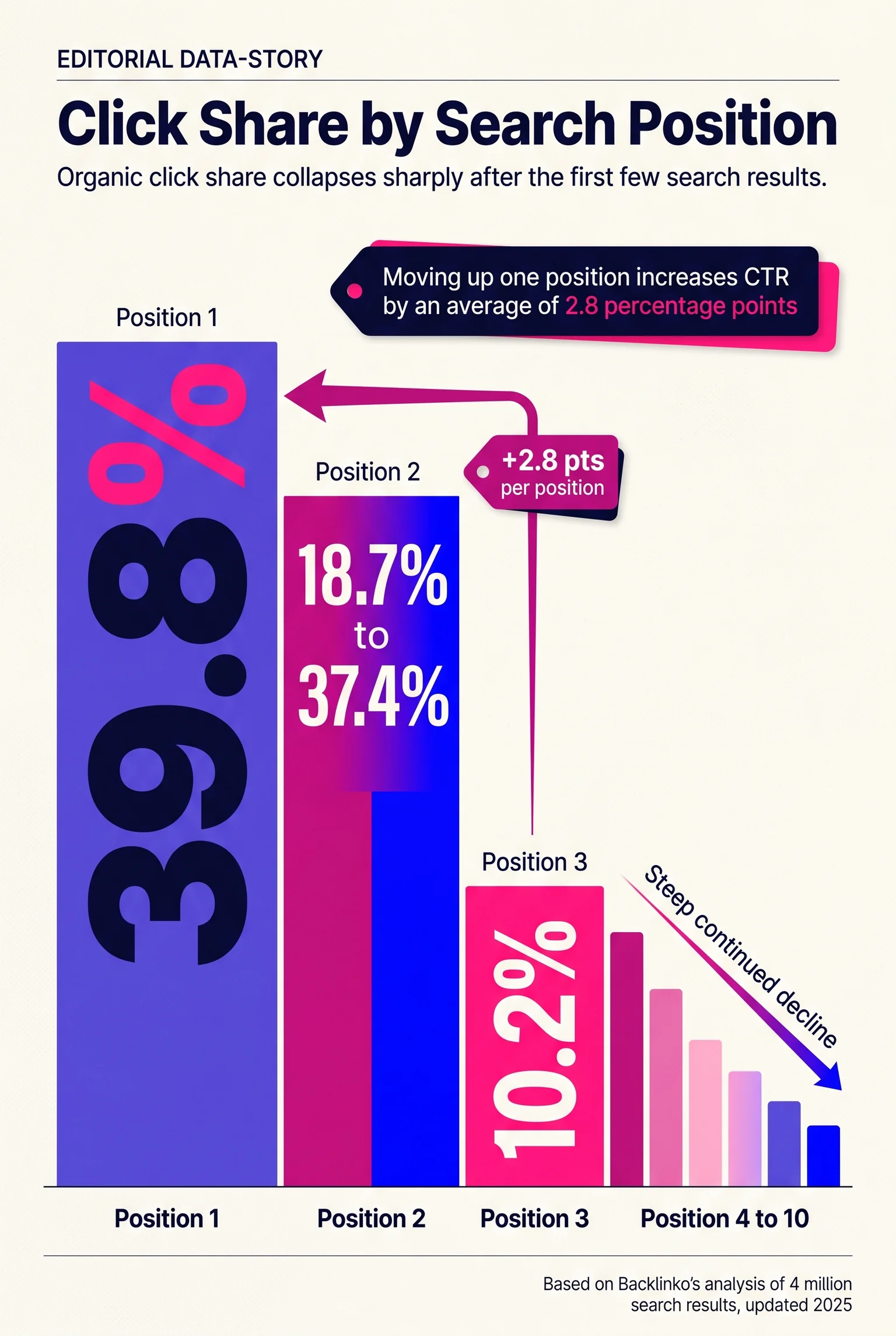
Where you sit on a Google results page decides whether a customer ever finds you. Backlinko’s analysis of 4 million search results, updated in 2025, found that moving up just one position increases your click rate by an average of 2.8 percentage points. That sounds small until you see the gap between the top of the page and the middle of it. The first organic result gets roughly 39.8% of all clicks, while third place gets around 10.2%. Drop further down and the numbers keep falling, so by the time you’re on results seven or eight, most searchers have already clicked something above you and moved on.
This is why rankings matter, but only as a step, not the destination. A higher position gets more people to your site. What happens after that click, whether they call, fill out a form, or buy, is where the revenue shows up. Industry estimates put average long-term SEO returns as high as $7.48 for every $1 spent, well above the typical return on paid ads, and local SEO specifically is reported to generate around 700% ROI for small businesses within 6 to 12 months, according to theStacc’s research.
Rankings open the door. Whether that turns into a sale still depends on what’s waiting on the other side of the click.
What this looks like for a real business
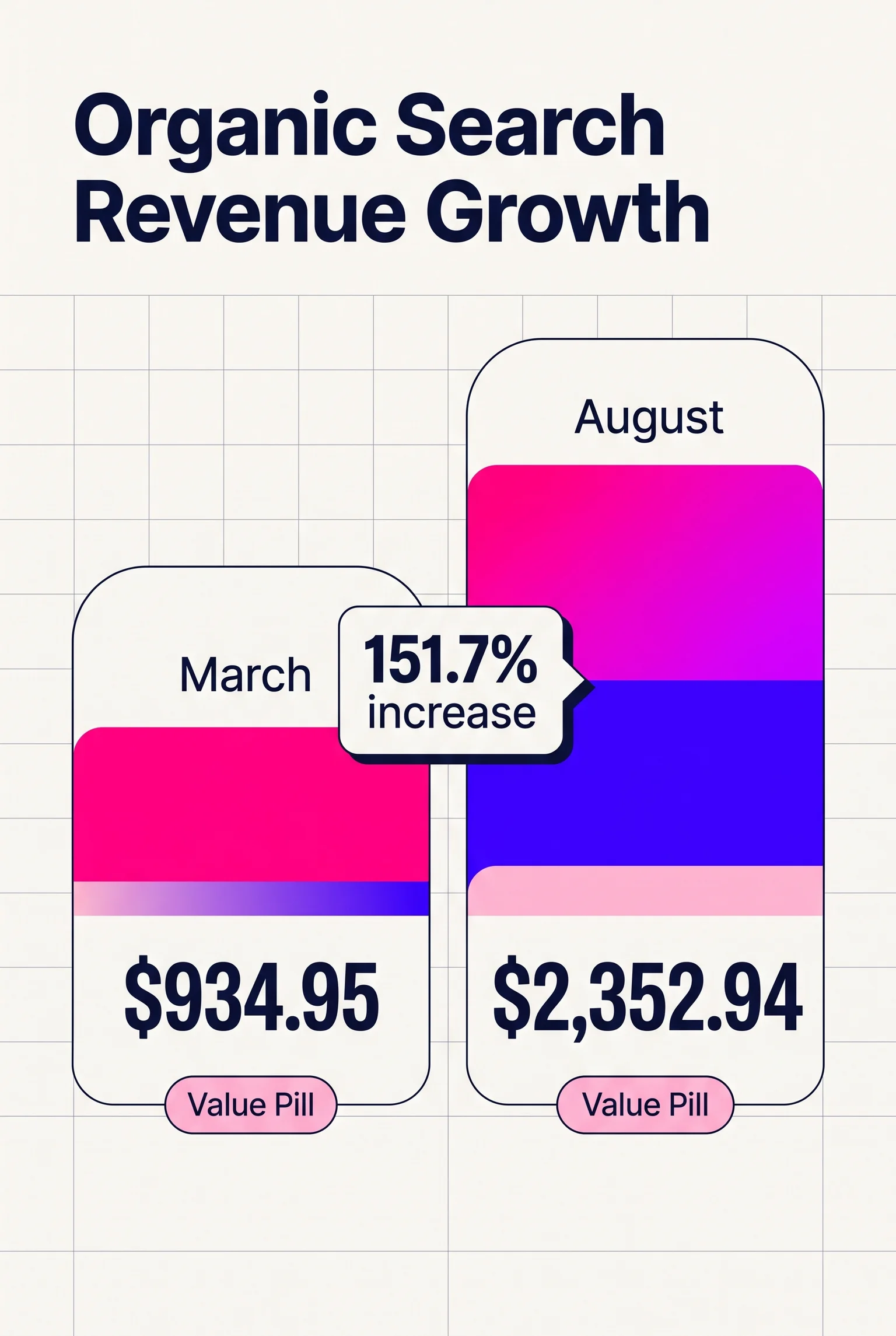
A handmade skincare brand ran a five-month SEO push covering product-page optimisation and content built around the searches customers were actually typing in. Between March and August, sales revenue from organic search grew from $934.95 to $2,352.94, a 151.7% increase. Total online revenue across all channels rose from $5,453.83 to $7,146, up 31%, showing the organic gains weren’t just cannibalising sales already happening elsewhere.
Local service businesses see similar patterns with a different lever. One service business focused entirely on its Google Business Profile: fixing categories, service descriptions, hours, and photos, then tracking every call, message, and direction request back to actual jobs booked. Over four months, monthly revenue attributed to that profile went from roughly £5.2K to £26K, a 520% increase, while holding an average map position of 1.8 across its service area.
A Portland bakery reported a 300% revenue increase tied to its SEO work, though the source doesn’t break down the specific tactics behind it.
What connects these examples isn’t the size of the percentage. It’s that each business tracked revenue by source and could point to a dollar figure, not just a ranking, as proof the work paid off.
Rankings and traffic don’t pay the bills. Sales do.
Can you rank number one for your main keyword, double your monthly visitors, and still not make an extra dollar? Yes, easily. Rankings, impressions, and raw traffic can all climb while sales stay flat, because none of those numbers tell you what visitors did once they landed on your site.
A campaign can even work against you. Ranking for the wrong search terms can pull in people who were never going to buy, inflating your traffic graph while your inquiries stay the same or drop.
The fix is tracking what happens after the click. A B2B software startup with 50,000 monthly visits was converting only 0.8% of that traffic into trial signups, around 400 a month. After the team focused on matching pages to what visitors actually wanted to do next, the conversion rate rose to 3.5%, taking monthly signups to 1,750, according to a case study from Debugged Software. Same traffic source, more than four times the outcome.
For context, most websites convert somewhere between 1% and 4% of visitors into a meaningful action, with online stores usually sitting around 1.8% to 2.0%. If you don’t know your own number, you have no way to tell whether your SEO is working or just busy.
Five things to fix before you spend a dollar on anything else
If your budget and time are limited, don’t spread them across ten SEO tactics at once. Start here, in this order.
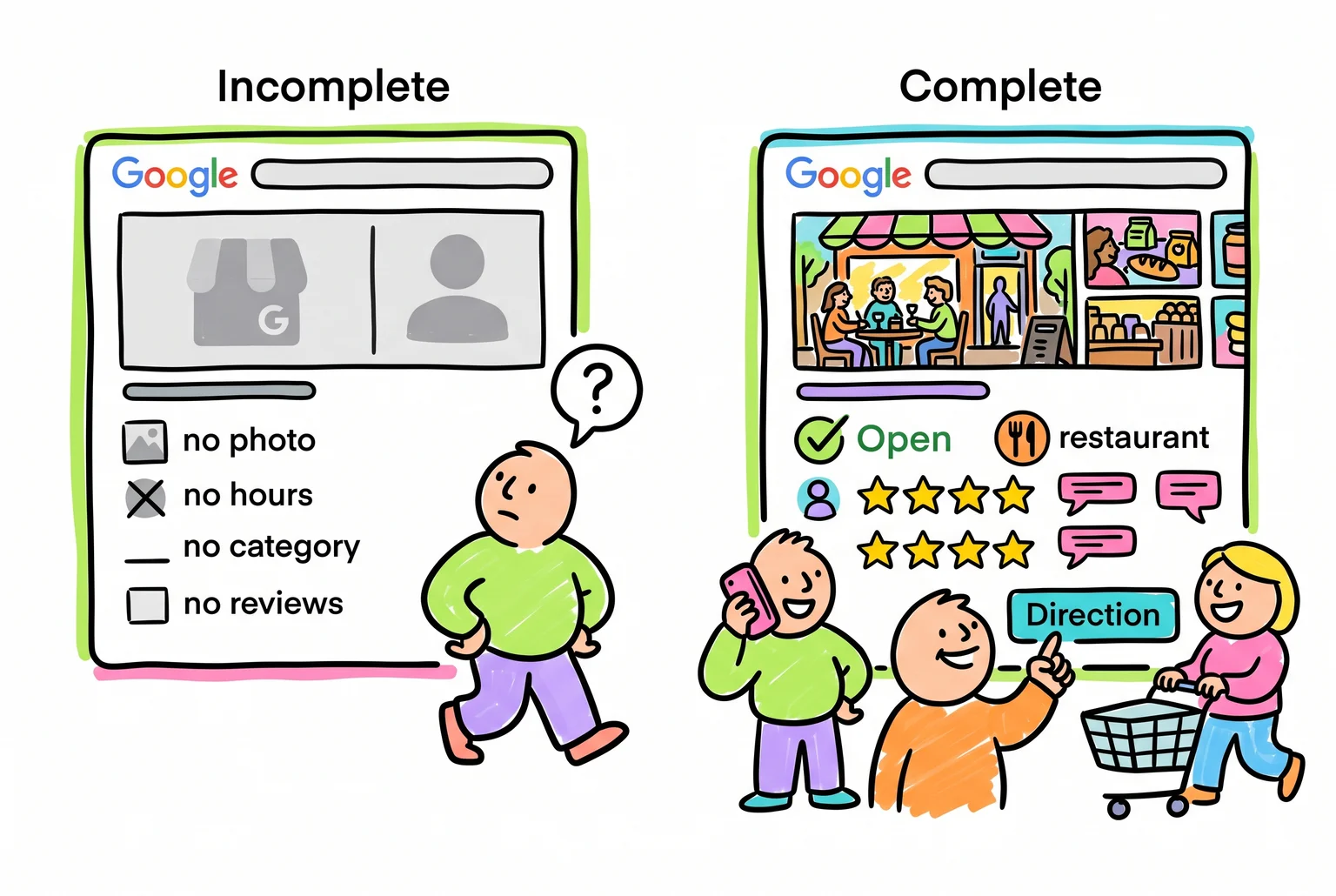
- Claim and verify your Google Business Profile. An unverified or incomplete profile usually doesn’t show up in the local pack, which is where most local calls and direction requests come from. If a customer searches your trade plus your suburb and you don’t appear, that’s the first gap to close.
- Pick one specific primary category, not a general one. Roughly 86% of Google Business Profile impressions come from people searching by category rather than by business name, so “Emergency Plumber” beats “Plumber” beats “Home Services”. Add secondary categories only if they reflect real services you offer.
- Fill in every section of the profile. Hours, service area, business description, and individual services with pricing where you can. Google uses these service entries to match search queries and to populate the call and directions buttons people tap directly from Maps.
- Add real photos and start collecting reviews. Ask happy customers directly, and reply to every review, good or bad, within a few days. A thin, photo-free profile with no reviews reads as inactive, even if you’re busy.
- Fix your title tags on key pages. Your homepage and main service pages need a clear title, ideally the service and your city, since that’s the clickable headline shown in search results. Add a meta description with a simple call to action like “Get a quote” or “Book now”.
None of this requires a developer or a specialist. It’s a few hours of typing into a form Google gives you for free.
The payoff is immediate rather than gradual. Google’s own data shows 76% of people who do a “near me” search visit a business within 24 hours, and about 20% buy the same day. A profile that’s missing categories, photos, or hours is turning away people who were ready to act within the hour.
Two free tools that show you what’s actually working
You don’t need to hire anyone to see whether your SEO effort is paying off. Two free Google tools cover most of what a small business needs.
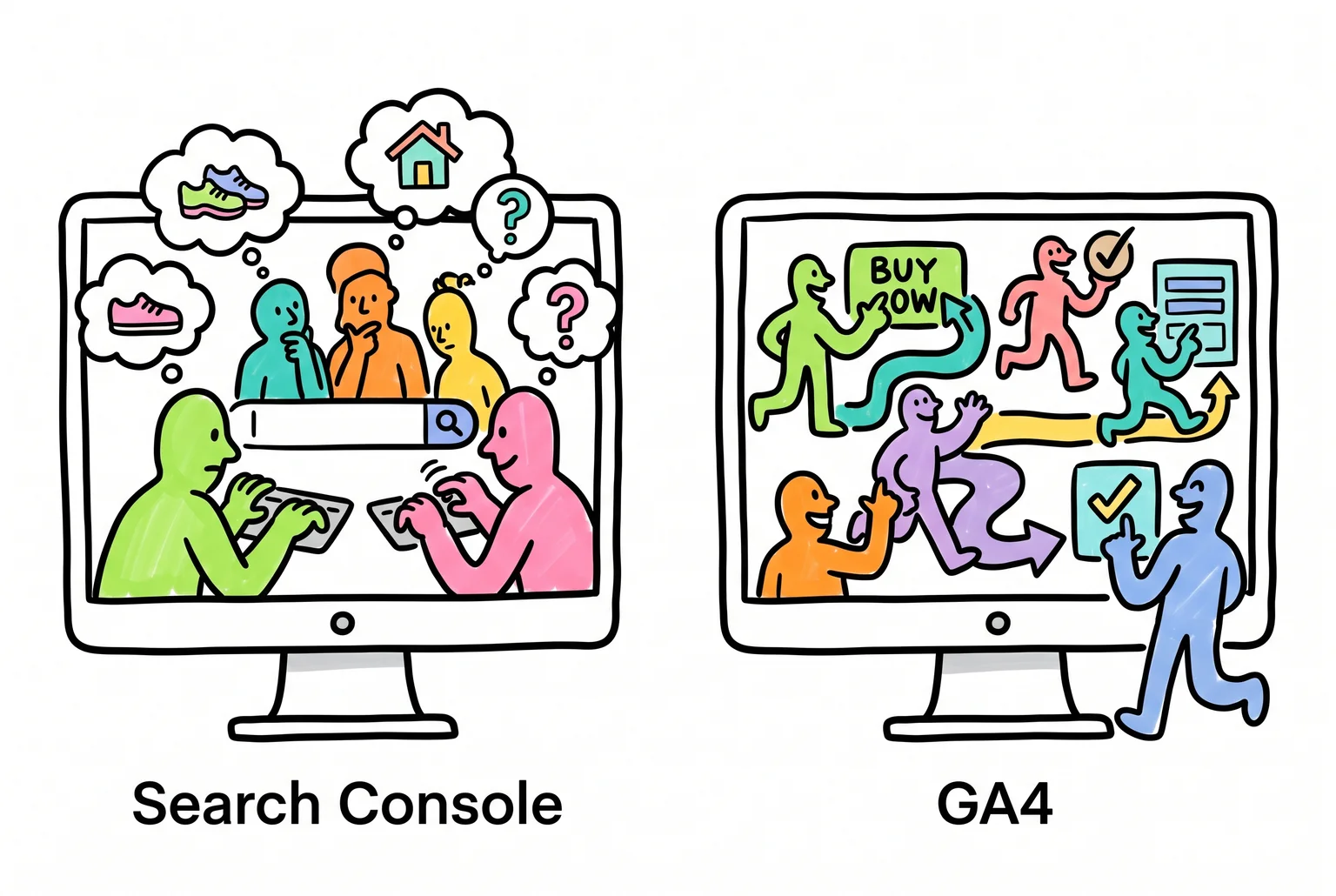
Google Search Console shows how your site shows up in Google Search results, including the exact phrases people typed before clicking through, how many times your pages appeared, and how many of those views turned into a click. It also flags pages that Google hasn’t indexed, which matters because a page that isn’t indexed can’t rank or bring in traffic at all. Check the overview screen weekly. It surfaces problems without you needing to dig through separate reports.
Google Analytics 4 picks up where Search Console leaves off. It tracks what happens after someone lands on your site: which pages they visit, whether they filled out a form, called your number, or requested a quote. You can mark those actions as key events, so instead of just watching visitor numbers climb, you can see which traffic source, organic search, social, or paid ads, is actually producing leads.
If you want keyword research on top of that, Ubersuggest offers a paid tier starting around $29 a month for suggesting search terms your customers use and auditing your site for basic issues.
Why SEO belongs in your budget, not your task list
A well-run SEO campaign returns a median of roughly $7.48 for every $1 spent, according to SeoProfy’s research. That figure tends to grow over time, since organic traffic and conversions build on each other rather than stopping the moment you stop paying, the way ad spend does.
That’s the real difference between SEO and most other marketing lines in your budget. Judge it the way you’d judge any investment: track leads, sales, and what it costs you to win a customer, not just where you sit on page one. If those numbers are moving in the right direction, the investment is working. If they’re not, that’s your signal to change something, not to walk away from search entirely.
Sources
- Small Brand SEO Case Study | +151% Organic Sales Growth in 5 … — Jessica Stegner SEO
- Local SEO: How a Service Business Went From Invisible to Fully Booked — Visionary Marketing
- Local Bakery’s 300% Revenue Boost via SEO | PDF — Scribd
- How We Boosted Organic Conversion by 340% for a B2B SaaS Startup: A Case Study | DebuggedSoftware — DebuggedSoftware
- What Is a Good Conversion Rate? Benchmarks by Industry | Lucky … — Lucky Orange
- Google Search Console — Google
- Google Analytics: Beginner’s Guide — Google Developers
- Ubersuggest: Free Keyword Research Tool – Neil Patel — Neil Patel
- SEO ROI Statistics for 2026: Data, Benchmarks & Trends — SeoProfy
If this post raised some questions feel free to ask me a question