
If you have to pick one place to test outside Google Ads, start with Microsoft Advertising, since it mirrors search intent at a lower average CPC. Run a second test on one paid-social platform (Meta, TikTok, or LinkedIn, depending on your buyer) and a third on a native or programmatic network like Taboola or AdRoll. None of this requires abandoning Google. It requires proving, with real numbers, that your budget works harder somewhere else too.
TL;DR:
- Microsoft Advertising offers a similar auction system to Google Ads, with lower CPCs and a user base that favors professionals and older searchers.
- Testing TikTok or LinkedIn requires significant creative resources and patience, as they target awareness and early research stages with longer learning curves.
- Native platforms like Taboola or Outbrain are best suited for content-led campaigns, with CPCs often lower but traffic quality more variable.
- Retargeting with AdRoll reduces CPA by recapturing existing visitors, but requires strict frequency controls and proper tracking to avoid overexposure.
- Small, fixed budgets and pre-test website adjustments, especially on landing page clarity and speed, significantly improve the reliability of cross-channel testing results.
Table of Contents
- What Are the Best Google Ads Alternatives to Test First?
- Why Is Microsoft Advertising the Closest Substitute for Google Ads?
- Should You Test Meta, TikTok, or LinkedIn Instead?
- How Do Native Networks Like Taboola and Outbrain Fit In?
- Can Reddit and Quora Actually Generate Qualified Leads?
- When Should Amazon Ads Replace Search Advertising?
- How Does Retargeting With AdRoll Lower Your Cost Per Acquisition?
- What Tracking Do You Need Before Testing a New Channel?
- How Do You Choose the Right Alternative for Your Business?
- What Have Local Businesses Learned From Testing Beyond Google Ads?
- When Should You Diversify Away From Google Ads?
- How Webby Website Optimisation Supports Cross-Channel Ad Testing
- Sources
What Are the Best Google Ads Alternatives to Test First?
You don’t need to test all ten platforms below. You need the two or three that match your buyer’s behavior right now, and a plan to measure them against what Google already delivers.
Here’s the shortlist, grouped by what each channel is actually good at:
- Search: Microsoft Advertising covers Bing plus Yahoo and AOL syndication partners, and it’s the closest thing to a direct Google Ads swap. Prioritize it if your buyers are older, more corporate, or searching on work devices.
- Paid social: Meta still wins on reach and visual ad formats; TikTok wins on engagement with younger and mid-career audiences; LinkedIn wins when you’re selling to a job title or company size, not a random consumer.
- Native and content recommendation: Taboola, Outbrain, and PropellerAds place ads inside editorial feeds and content widgets. These work best for awareness campaigns and content-led lead generation, not immediate purchase intent.
- Community and Q&A: Reddit and Quora capture people actively researching a decision, often before they’ve typed a branded search into Google at all.
- Ecommerce marketplace: Amazon Ads makes sense specifically for businesses selling physical products through Amazon’s catalog. It’s close to irrelevant for local service businesses.
- Programmatic and retargeting: AdRoll and similar demand-side platforms don’t generate new demand. They recapture people who already looked at your site and didn’t convert.
The pattern that matters here: search alternatives replace intent-based clicks, social and native alternatives replace awareness spend, and programmatic replaces the retargeting layer Google Ads already does through its own display network. Pick one from each layer, not three from the same layer, and you’ll actually learn something.
Why Is Microsoft Advertising the Closest Substitute for Google Ads?
Microsoft Advertising runs on the same auction logic as Google Ads: keywords, match types, Quality Score equivalents, and a bidding system built around search intent. That similarity is the whole appeal. You’re not relearning an ad format, you’re moving the same campaign structure to a smaller, cheaper pond.
The audience skews meaningfully different. Bing’s user base leans older and more likely to be on a work computer, which tends to correlate with higher household income and B2B purchase authority. If you sell professional services, software, or anything with a longer sales cycle, that skew works in your favor.
On cost, Microsoft Advertising is often cited as the closest search-based alternative to Google Ads, frequently showing lower CPCs for comparable keywords, though the gap varies a lot by industry and how competitive your specific keyword set is. Lower CPC does not automatically mean lower cost per acquisition. It means you get more shots at the same budget, which only pays off if your landing page converts at a similar rate.
Migrating an existing account is more mechanical than most marketers expect:
- Import your Google Ads account directly using Microsoft’s import tool, which pulls in campaigns, ad groups, keywords, and ads in one pass.
- Recheck your bid strategy immediately, since automated bidding trained on Google’s auction data doesn’t transfer its learning, and it needs fresh conversion volume before it optimizes well.
- Audit your negative keyword lists, because Bing’s search partner network surfaces some queries Google never would, and stale negatives leave gaps.
- Verify conversion tracking fired correctly before you trust a single number the dashboard shows you.
Microsoft’s own guidance is blunt about this: don’t assume an imported campaign performs identically. Attribution windows differ, device mixes differ, and audience signals rebuild from scratch.
Pro Tip: Run Microsoft Advertising in parallel with Google Ads for at least four weeks before you touch your Google budget. You want a real cost-per-lead comparison, not a guess based on two weeks of thin data.
Treat Microsoft Advertising as a parallel channel, not a replacement, until the numbers say otherwise. For most service businesses, it becomes a legitimate second engine rather than a full swap.
Should You Test Meta, TikTok, or LinkedIn Instead?
The honest answer depends less on your industry and more on two things: how good your creative team is, and how much you can tolerate a slower path to intent.
Search ads catch someone who already decided to look for a solution. Social ads interrupt someone scrolling for something else entirely, which means the ad itself, not the keyword, does the work of creating interest. That’s a fundamentally different skill set, and it’s the reason so many search-trained marketers stumble when they move budget to social.
Here’s how the three main platforms split by use case:
- Meta (Facebook and Instagram) still delivers the broadest reach and the widest set of formats, from Stories to Reels to carousel product ads. It’s the safest first move if your creative team is small, since Meta’s ad library has enough proven formats to copy from.
- TikTok rewards fast, native-feeling video and punishes anything that looks like a traditional ad. Engagement rates run high, but so does creative burn, meaning you’ll need new assets more often than you would on Meta.
- LinkedIn targets by job title, company size, industry, and seniority, which no other platform matches for B2B precision. Expect to pay a real premium for that precision. Cost per click on LinkedIn regularly runs several times higher than Meta.
Creative requirements shift your cost structure in ways search never did. A Google Ads account needs decent ad copy and a landing page. A TikTok account needs a content pipeline, which means either an in-house creator or a real budget for one, and that changes your true cost per test far more than the platform’s rate card does.
Measurement gets murkier here too. Search shows near-immediate intent signals, click to conversion, in a matter of minutes. Social often needs a multi-touch view, since someone might see your ad three times over two weeks before they ever click. Expect a higher cost per acquisition on social in the early weeks and don’t panic. That’s the learning phase, not the verdict.
A workable first test: run two or three creative variants against the same landing page for two weeks, spend enough to get statistically meaningful clicks (usually a few hundred per variant, not a few dozen), then kill the losers and double down on the winner. That’s a faster, cheaper way to learn than agonizing over targeting settings before you’ve even proven a creative angle works.
How Do Native Networks Like Taboola and Outbrain Fit In?
Native advertising puts your ad inside a content feed, styled to look like an article recommendation rather than an obvious banner. That disguise is the entire mechanism: readers click because it looks like more of what they were already reading, not because they were hunting for your product.
This makes native fundamentally a mid-funnel tool, not a bottom-funnel one. Nobody clicks a native ad ready to buy in the next ten minutes. They click because a headline promised something interesting, which means your landing page needs to deliver content first and a pitch second.
The best use cases follow that logic directly:
- Content-led funnels, where the ad promotes a genuinely useful guide, calculator, or comparison piece, not a product page.
- Lead magnets, where the native click leads to an email capture in exchange for something of value.
- Long-form landing pages that read more like an article than a sales page, since that format matches what the reader expected when they clicked.
PropellerAds and comparable native platforms are consistently positioned as lower-cost alternatives for awareness and mid-funnel traffic, and the price advantage is real. You’ll often see CPCs a fraction of what comparable search or social clicks cost. But that low cost comes with a catch: traffic quality on native networks varies more than it does on search or social, and the same headline that drives a strong click-through rate can also attract people with no real interest in converting.
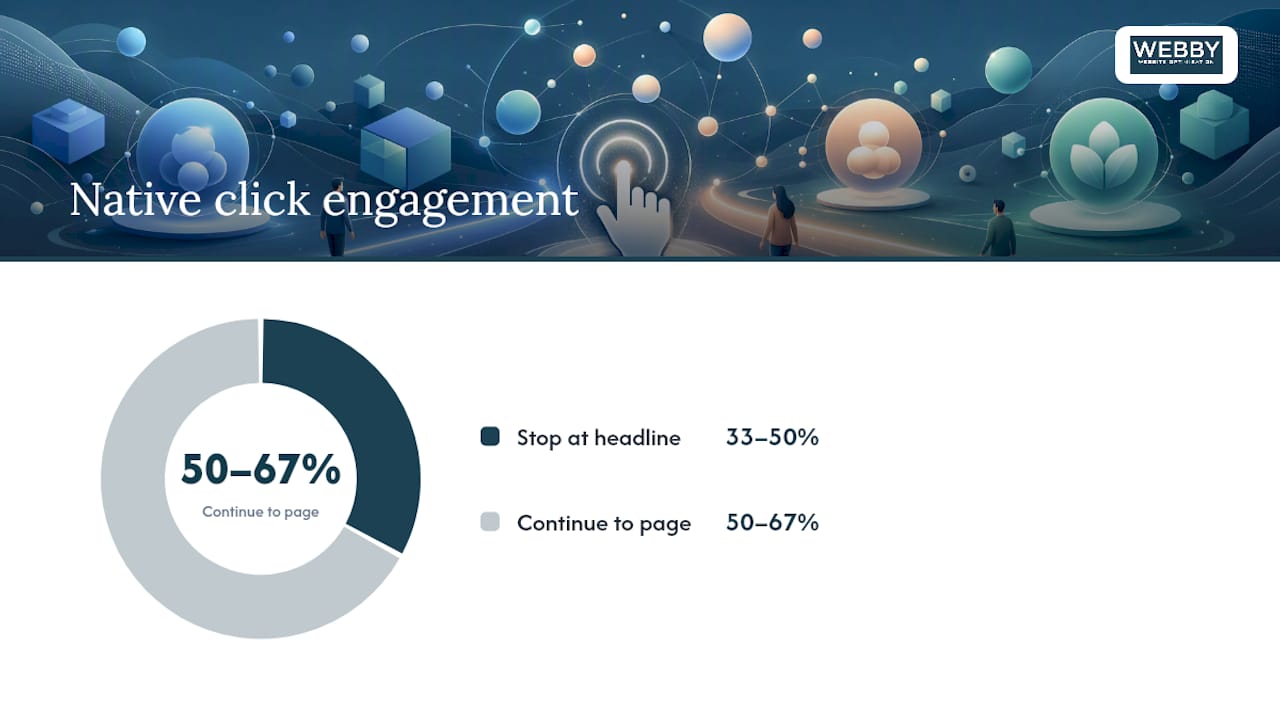
That means your KPI has to shift too. Don’t judge a native campaign on cost per click. Judge it on cost per qualified lead, or better, cost per conversion after you’ve filtered out the tire-kickers. Anywhere from a third to half of native clicks on a given campaign might never scroll past your headline, so QA your landing pages early and often.
Practical setup notes that actually move the needle: write headlines that promise a specific outcome rather than a vague benefit, use thumbnail images that look like real photos rather than stock graphics (native audiences have gotten good at spotting stock imagery instantly), and match your landing page’s first paragraph to whatever the ad headline promised. Any mismatch there kills conversion fast, since the reader feels tricked the moment the page doesn’t deliver on the click.
Can Reddit and Quora Actually Generate Qualified Leads?
Yes, but only for specific verticals, and only if you understand that both platforms punish anything that reads like a traditional ad.
Reddit and Quora capture something search and social both miss: people actively researching a decision, often before they’ve formed the vocabulary to type a branded search query. Someone asking “best accounting software for a five-person agency” on Reddit is closer to bottom-funnel than most social scrollers, even though they haven’t searched anything on Google yet.
The two platforms behave differently:
- Reddit targets by subreddit and interest, which means your ad sits inside a community with its own tone, inside jokes, and skepticism toward marketing. Ads that acknowledge that tone outperform ads that ignore it.
- Quora targets by topic and question category, putting your ad near content where someone is already reading a detailed answer, which makes it a slightly softer sell than Reddit’s more combative culture.
Targeting on both platforms works at the topic or community level rather than the granular demographic level LinkedIn offers. That’s a trade-off: less precision, but access to intent signals neither Google nor Meta can replicate.
Creative guidelines matter more here than on almost any other platform. Overly polished, obviously corporate ad copy gets ignored or actively downvoted on Reddit. Test a plainer, more conversational tone before you test anything slick. Run small batches, watch comment sentiment closely (both platforms allow public engagement on ads), and pull creative fast if it draws negative attention. That moderation risk is the real cost of testing here. It’s not the CPC, it’s the reputational exposure if an ad lands badly in a community that talks back.
Community ads tend to beat search and social specifically for niche B2B tools, specialized professional services, and anything with a passionate hobbyist or enthusiast audience. If your product fits none of those buckets, this channel probably isn’t worth the setup time yet.
When Should Amazon Ads Replace Search Advertising?
Amazon Ads makes sense in exactly one scenario: you sell a physical product through Amazon’s marketplace and buyers are already searching Amazon directly instead of Google. Outside that scenario, skip this section entirely. It’s close to irrelevant for local service businesses, which covers most of the client base a general audience represents.
For product sellers, though, the intent signal on Amazon is about as strong as advertising gets. Someone searching Amazon has usually already decided to buy something in that category. Your ad just decides whose product they see first.
- Sponsored Products bid on keywords within Amazon search results, functioning almost identically to a Google Ads search campaign, just contained inside Amazon’s ecosystem.
- Amazon DSP buys programmatic display and video placements both on and off Amazon, aimed more at retargeting shoppers who viewed but didn’t buy.
- ACOS (Advertising Cost of Sale) is Amazon’s core efficiency metric, calculated as ad spend divided by ad-attributed sales. A lower ACOS means more efficient spend, the inverse relationship of ROAS.
- ROAS works the same way it does everywhere else: revenue divided by ad spend, giving you the flip side of the ACOS number.
- Compare ACOS against your product margin, not against your Google Ads CPA, since the two metrics measure fundamentally different funnels.
Before you launch anything, confirm your product listings are fully optimized (title, bullet points, images) and that your ASIN catalog is clean. Amazon Ads amplifies a good listing and wastes budget on a bad one just as fast.
How Does Retargeting With AdRoll Lower Your Cost Per Acquisition?
Retargeting doesn’t create new demand. It recovers demand you already paid to generate once, on Google, on social, or through organic traffic, and that recovery is usually cheaper than winning a fresh click.
Programmatic and retargeting platforms like AdRoll are commonly recommended specifically for reinforcement, lowering blended cost per acquisition when paired with an intent-generating channel rather than run alone. That pairing matters. Retargeting has nothing to show someone who’s never visited your site.
- Dynamic creative automatically swaps in the exact product or page a visitor viewed, rather than showing everyone the same generic ad.
- Cross-site reach puts your ad in front of that visitor across a wide network of publisher sites, not just one platform.
- Lookalike audiences let you build new prospecting lists modeled on your best existing customers, extending retargeting data into fresh acquisition.
- First-party pixel data is the prerequisite for all of this. No pixel, no retargeting list, no matter how good the platform is.
- Fold retargeting into a multi-touch attribution model, since crediting it with a full conversion when search or social did the initial work overstates its actual contribution.
The most common failure mode is overexposure: the same three creatives following someone around the internet for six weeks straight. Set frequency caps, rotate creative every couple of weeks at minimum, and cut anyone who’s seen an ad more than a dozen times without converting. At that point, you’re paying to annoy someone, not persuade them.
What Tracking Do You Need Before Testing a New Channel?
None of this works if your measurement is broken before you even launch. Get the technical groundwork right first, because a bad test with clean tracking still teaches you something. A good test with broken tracking teaches you nothing.
- Verify pixel and server-side tracking fire correctly on every conversion event before you spend a dollar. A misfiring pixel gives you confident, completely wrong numbers.
- Confirm cross-domain tracking if your ad platform and landing page sit on different subdomains or third-party booking tools, since sessions can silently break at that handoff.
- Set a consistent attribution window across every platform you test. Comparing a 7-day click window on one platform against a 30-day window on another isn’t a fair test, it’s a coin flip dressed up as data.
- Run the Microsoft import checklist if you’re migrating campaigns: recheck keyword match types, rebuild negative keyword lists, and confirm conversion actions map correctly to the imported campaigns.
- Set a minimum data threshold before drawing conclusions, generally a few hundred clicks or at least a couple dozen conversions per variant, so you’re not making a budget call off six data points.
Pro Tip: Give every new channel a fixed learning budget upfront, spelled out as a dollar figure, not a percentage of your monthly spend. An open-ended test always creeps past its usefulness because nobody wants to be the one who calls it early.
Advertiser guides consistently point to the same rule here: match the platform to the buyer’s stage in the journey, test with a small fixed budget, and hold your landing page steady while you test the channel, not the other way around. Changing both variables at once means you’ll never know which one actually moved the number. If your landing pages need work before you can trust a test, that’s worth fixing through website design and development before you spend another dollar driving traffic to them.
How Do You Choose the Right Alternative for Your Business?
Run through five questions before you commit budget to any new platform, in this order:
- Does the platform’s audience match your actual buyer? An older, professional Bing audience fits B2B services. A younger TikTok audience fits consumer products with visual appeal.
- What stage of intent are you targeting? Search and marketplace ads catch high intent. Social, native, and community platforms catch awareness and early research.
- Can your team produce the creative this channel demands? TikTok without a content pipeline is a wasted test before it even starts.
- What’s your realistic budget envelope? A test under $1,000 rarely generates enough data on a platform with a slow learning curve like LinkedIn.
- Is your tracking ready to measure this fairly against Google Ads? If not, fix that first.
From there, build a mini test plan: state a specific hypothesis (“Microsoft Advertising will deliver a lower cost per lead than Google for our top five service keywords”), pick one or two KPIs to judge it by, commit to a minimum sample size before calling it, and set a hard timeline, typically four to six weeks for search, six to eight for social or native given the longer learning curve.
| Signal | What it means |
|---|---|
| CPC drops but conversion rate also drops | Traffic quality issue, not a budget win |
| Cost per lead beats Google within 2 weeks | Strong early signal, worth scaling cautiously |
| Attribution numbers don’t match platform dashboard | Fix tracking before trusting any other number |
| Creative fatigue after around two weeks on social | Rotate assets, don’t just increase budget |
| Zero conversions after your minimum sample size | Kill the test, don’t extend it hoping for a turnaround |
Watch for red flags that should pause a test immediately rather than waiting out the full timeline: a sudden spike in bounce rate on ad traffic specifically (a sign of mismatched creative and landing page), conversion numbers that don’t reconcile between the ad platform and your own analytics, or cost per click trending upward fast with no corresponding lift in conversion quality.
What Have Local Businesses Learned From Testing Beyond Google Ads?
Webby Website Optimisation’s case studies with local service businesses show a consistent pattern: the businesses that improved lead volume most weren’t the ones that abandoned Google Ads. They paired it with one disciplined secondary channel and fixed their landing pages before scaling spend on either one.
A few things that held up across different client campaigns:
- Landing page speed and clarity mattered more than platform choice in almost every case. A slow or confusing page sank performance on Microsoft Advertising just as fast as it did on Google.
- Small, fixed test budgets outperformed open-ended ones. Clients who set a defined dollar amount for a channel test made cleaner decisions than clients who let a test run indefinitely.
- Combining paid tests with baseline organic visibility work compounded results, since a channel test on a site with weak underlying SEO still had to fight for attention once someone landed.
- Tracking setup issues were the single most common reason a test looked worse than it actually performed. Fixing a broken conversion event often revealed a channel was performing fine all along.
Steve Doig’s practical advice for anyone running these tests: audit your conversion tracking before you touch ad spend, not after. And build a dedicated landing page variant for each new channel rather than sending everyone to the same generic page that was built around your Google Ads campaigns. Different traffic sources arrive with different expectations, and a page that doesn’t acknowledge that context tends to underperform no matter how good the ad was.
When Should You Diversify Away From Google Ads?
Diversification makes sense when you’ve already got Google Ads producing steady, measurable results and you want to protect against rising CPCs or platform dependency, not when Google Ads is failing and you’re hoping a new platform magically fixes a broken funnel. If your landing page or tracking is the actual problem, a new ad platform just gives you a new place to lose money faster.
Webby Website Optimisation’s approach with small business clients almost always favors parallel testing over wholesale replacement. Pick one alternative channel, run it alongside Google Ads with a genuinely fixed budget, and let four to six weeks of real data make the call rather than a gut feeling after week one.
For small teams with limited budgets, the lowest-risk diversification move is usually Microsoft Advertising, precisely because it reuses skills and assets you already have. Save the creative-heavy platforms like TikTok for when you’ve got the production capacity to support them properly.
The single most useful next step: before you open a new ad account anywhere, pull your last 90 days of Google Ads data and identify your actual cost per qualified lead, not just cost per click. You need that number as your benchmark, or every new platform test is just a guess dressed up as a decision.
How Webby Website Optimisation Supports Cross-Channel Ad Testing
An alternative to hiring a full-time media buyer is available for those who want to test Microsoft Advertising, paid social, or a native network without guessing at the setup. Professional services often handle the parts that quietly sink most channel tests: conversion tracking that actually fires correctly, landing pages built to match each platform’s traffic instead of one generic page for everything, and campaign structures that hold up to scrutiny once real budget is on the line.
Because search alternatives only pay off when the landing experience is fast and clear, we typically start by tightening website design and development before a client spends heavily on a new platform. For businesses that want a working site fast without a long build cycle, our website built in a day service gets a test-ready page live quickly, and ongoing WordPress maintenance and support keeps it stable while traffic scales. If you’re ready to see where your budget could work harder outside Google Ads, get in touch with our team to talk through a test plan built around your actual numbers.
Sources
- The best alternatives to Google Ads
- Google Ads Alternatives 2026: The Guide To Platform Selection
- Microsoft Advertising help / import tools