
So, you're thinking about building a new website? One of the first questions on your mind is probably, "How much is this going to set me back?" It’s a bit like asking for the price of a car without mentioning if you want a basic hatchback or a custom-built V8. The answer is always: it depends.
The website construction cost for Australian businesses can swing from a few thousand dollars for a simple online brochure to tens of thousands for a sophisticated e-commerce beast. The final figure all comes down to what you need it to do.
Your Guide To Australian Website Construction Costs
Trying to nail down a single price for a website is tough. A simple, informational site with a handful of pages is naturally going to be more affordable than a sprawling online store that needs payment gateways, inventory tracking, and customer accounts. The real cost isn't just in the design you see; it's in the complexity humming away behind the scenes.
Think of your website as a digital storefront. A simple pop-up shop is quick and affordable to set up, but a multi-level department store requires significant investment in architecture, interior design, and specialised systems to function effectively.
This guide is designed to be your financial compass, breaking down the costs so you can plan with confidence. Let's start with a quick overview of what you can expect to invest for different types of websites here in Australia.
Typical Website Build Costs In Australia (AUD)
Here’s a snapshot of typical one-off build costs to give you a ballpark idea.
| Website Type | Typical Price Range (One-Off Build) | Best For |
|---|---|---|
| Brochure Website | $5,000 – $10,000 | Small businesses, startups, and service providers needing a professional online presence. |
| Small Business Website | $10,000 – $25,000 | Growing businesses requiring features like blog integration, booking systems, or lead-capture forms. |
| E-commerce Store | $15,000 – $50,000+ | Businesses selling products online, needing payment gateways, shipping calculators, and inventory management. |
| Custom Web Application | $50,000 – $150,000+ | Companies with unique operational needs, requiring custom-built software or complex integrations. |
As you can see, a standard brochure website is often the entry point for many small businesses. A budget of AUD $5,000 to $10,000 typically gets you a professionally designed 5–10 page site that’s mobile-friendly and has basic SEO foundations in place. This is often built on a flexible platform like WordPress, which happens to be a specialty for Perth-based teams like ours at Webby.
By getting a handle on these components, you can walk into any conversation with a developer feeling confident and prepared. It ensures you can create a realistic budget and, most importantly, get fantastic value for your investment.
For an even deeper dive, check out our comprehensive guide on how much a website costs.
Breaking Down Your Initial Investment
The upfront build is the single largest slice of your website budget. It's where your business goals, brand, and customer needs start coming to life online. The total website construction cost hinges directly on how complex and feature-rich you need your site to be. A simple online brochure does a very different job than a bustling e-commerce store, and the price tag naturally reflects that.
Figuring out what your initial investment will be can often feel like you're decoding complex costs. You have to look at all the individual parts to really get a handle on the final figure. Let's unpack the common types of website projects to see how different features and business needs shape the budget.
The Foundational Brochure Website
Think of a brochure website as your digital business card. Its main job is to plant your flag online professionally, give people the essential info, and provide a clear way for them to get in touch. These sites are a perfect fit for service-based businesses, tradies, or consultants who aren't selling products directly online.
The scope is usually pretty straightforward, which helps keep the costs down. A typical brochure site will include:
- A homepage to introduce who you are and what you do.
- An 'About Us' page to build a bit of trust and share your story.
- A 'Services' page (or pages) detailing your offerings.
- A contact page with a simple form, phone number, and maybe a map.
Because the functionality is limited—no online payments, user accounts, or tricky integrations—the development time is much shorter. This makes it the most affordable way to get a professional-looking website up and running.
The Small Business Workhorse
A standard small business website needs to do more than just exist. It’s built to be a lead-generating machine that actively engages visitors. It’s a true workhorse, taking everything from the brochure site and adding more dynamic features to really drive business growth.
For instance, you might want a blog to share your expertise and give your SEO a boost. Or perhaps you need an integrated booking system so clients can schedule appointments directly. More detailed service pages, glowing customer testimonials, and sophisticated quote request forms all add to the site's power, but also to its complexity and cost. This is where your website stops being a static flyer and becomes an active part of your sales funnel.
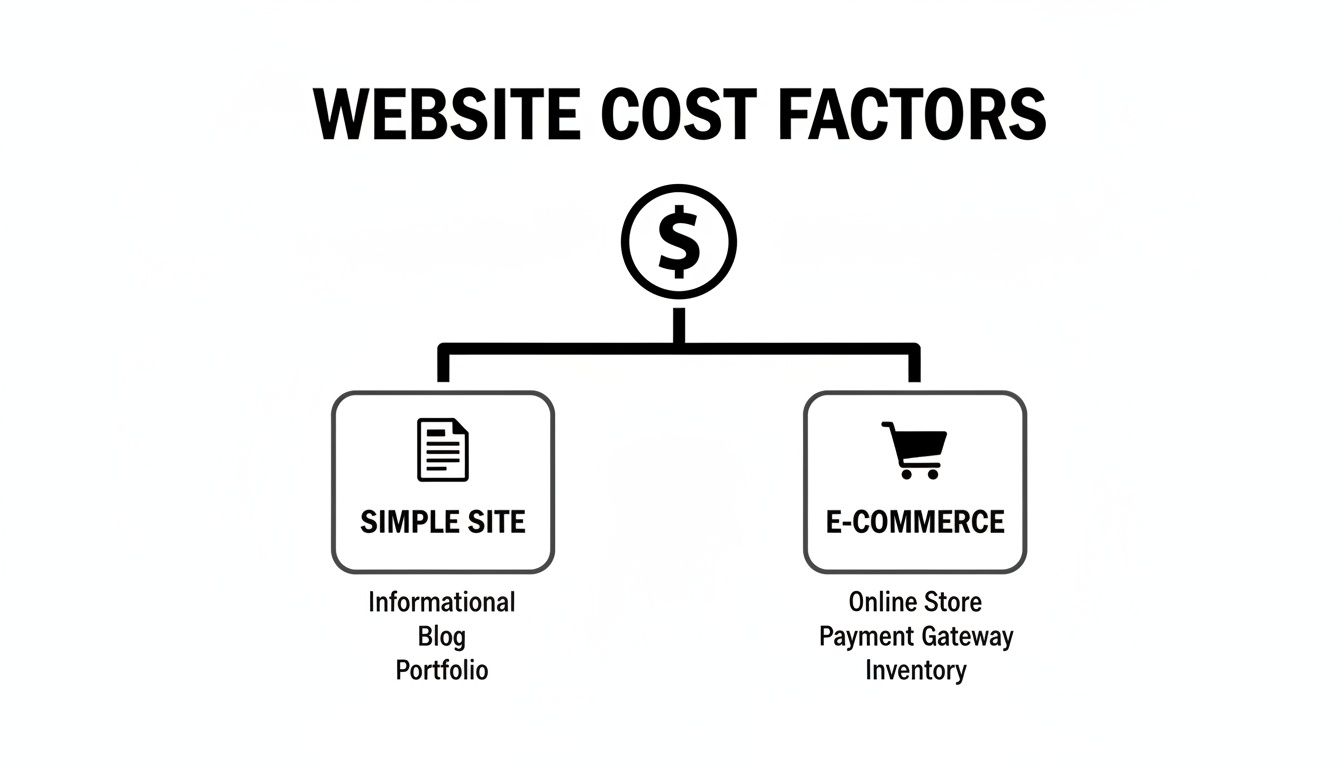
As you can see, the more specialised functions you add, like the ability to sell products online, the further up the investment ladder you climb.
To give you a clearer picture, here’s a breakdown of what you can generally expect for different types of website projects in Australia.
Cost Breakdown By Website Type And Features
| Website Type | Price Range (AUD) | Included Features | Typical Timeline |
|---|---|---|---|
| Brochure Site | $3,000 – $6,000 | 5-7 pages, basic contact form, responsive design, on-page SEO setup. | 2-4 Weeks |
| Small Business Site | $6,000 – $15,000 | 10-20 pages, blog, lead capture forms, basic integrations (e.g., booking). | 4-8 Weeks |
| E-commerce Site | $10,000 – $30,000+ | Product uploads (up to 50), payment gateways, shipping rules, customer accounts. | 8-16 Weeks |
| Custom Build | $25,000 – $100,000+ | Custom functionality, membership portals, API integrations, unique design. | 12+ Weeks |
These figures are a solid starting point, but remember they can shift based on the specific developer you choose and the exact features you need.
Scaling Up To E-commerce
Opening an online store throws a whole new level of technical complexity into the mix. An e-commerce website isn't just a few extra pages; it's a complete system with a lot of moving parts that need to work together perfectly to handle money securely and keep customers happy.
An e-commerce site isn't just a website with products; it’s a complete retail operation. The build must account for inventory management, secure payment processing, shipping calculations, and customer account management—all of which require specialised development.
The big cost drivers for any e-commerce project typically include:
- Payment Gateway Integration: Getting your site to talk securely with providers like Stripe, PayPal, or Afterpay.
- Inventory Management: A system to track stock levels, product variations (like size and colour), and SKUs.
- Shipping Logic: Setting up rules for different shipping zones, calculating rates, and connecting with couriers.
- Customer Accounts: Giving users the ability to see their order history, save addresses, and manage their details.
Each of these pieces adds significant time and requires real expertise, which is why e-commerce builds naturally sit at a higher price point.
The World Of Custom And Bespoke Builds
Finally, we have bespoke websites. These are built from the ground up to solve a very specific business problem. These projects go way beyond standard templates or off-the-shelf plugins, involving custom code to deliver functionality you simply can't get anywhere else.
Think of things like a membership portal with different access tiers, a real estate site with complex property filters and agent dashboards, or a platform that needs to integrate with a company's internal, proprietary software. The website construction cost for these projects is the highest because they demand extensive planning, unique development, and a whole lot of testing. For these builds, the final price is determined entirely by the project's unique scope, making a detailed brief an absolute must-have for getting an accurate quote.
What Really Drives Your Final Website Cost

Ever look at two websites that seem pretty similar on the surface and wonder why one cost five times more than the other? The secret isn’t in what you can see; it’s hidden in the machinery working behind the scenes. Your final website construction cost has less to do with the number of pages and more to do with the engine running under the bonnet.
Looking past the simple page count is where you’ll find the real cost drivers. Think of it like building a house. Two homes might have the same number of bedrooms, but the one kitted out with Italian marble, smart home automation, and a professional chef's kitchen will have a wildly different price tag than the one with standard fittings. Websites are no different.
Let's pull back the curtain on what actually shapes that final quote. Knowing this will help you ask the right questions and understand exactly where your money is going.
Design and Development Complexity
The first big decision you’ll make is between a pre-built theme and a completely custom design. A premium WordPress theme can be a brilliant starting point, giving you a professional-looking framework. But it still needs a skilled hand to mould it to your brand, which takes time and expertise.
A fully bespoke design, on the other hand, is like commissioning a unique piece of art. It’s built from the ground up just for you, but that process demands a much heavier investment in both design and development hours.
The technical complexity is just as important. A simple brochure website might get by with standard HTML and CSS. But if you want interactive elements, slick animations, or custom calculators, you're venturing into the world of complex JavaScript, PHP, and database management. The more sophisticated the features, the more code needs to be written, tested, and perfected.
Essential Third-Party Integrations
These days, a website rarely works in isolation. It’s the central hub that connects all your other business tools. This is where integrations come in, and they can be a significant part of your website construction cost. Each one needs to be carefully configured and tested to make sure information flows smoothly and securely between systems.
Some common integrations that expand a project's scope include:
- Customer Relationship Management (CRM): Automatically sending leads from your contact forms straight into systems like HubSpot or Salesforce.
- Booking and Scheduling Systems: Letting clients book appointments directly on your site through tools like Calendly or Acuity Scheduling.
- Email Marketing Platforms: Connecting sign-up forms to Mailchimp or Campaign Monitor to build your email list.
- Accounting Software: For e-commerce stores, syncing sales data with Xero or MYOB is a game-changer for bookkeeping.
Every tool you plug in adds another layer of technical work, which naturally nudges the budget upwards.
Often Overlooked But Critical Expenses
Many quotes focus on the shiny parts—the design and the build. But there are several behind-the-scenes tasks that are absolutely vital for a successful launch. Skimping on these can seriously undermine your entire investment.
A beautifully designed website without professional content or foundational SEO is like an empty shop with no sign out the front. It might look great, but no one will find it, and those who do won't know what to do next.
Here are a few critical expenses that often get forgotten:
- Professional Copywriting: The words on your site are your 24/7 salesperson. Well-written, persuasive copy that’s optimised for search engines is a specialised skill, and it’s one of the best investments you can make.
- Foundational SEO Setup: This isn't about ongoing marketing campaigns; it's the technical groundwork. It involves creating an XML sitemap, setting up redirects, optimising meta titles and descriptions, and making sure Google can find and understand your site from day one.
- Google Analytics (GA4) and Tag Manager (GTM) Implementation: Without data, you’re just guessing. A proper setup of Google Analytics 4 and Google Tag Manager allows you to see what visitors are doing, track conversions, and make smart, data-driven decisions. This is crucial for proving your website’s return on investment.
Beyond The Build: Ongoing Maintenance And Hosting Costs
Getting your new website live is a fantastic milestone, but it's really just the beginning. The initial website construction cost is the first chapter, not the whole story. To make sure your shiny new digital asset stays secure, fast, and actually works for your business, you need to plan for its ongoing care.
It's a bit like buying a new car. The purchase price gets you off the lot, but you still have to budget for fuel, insurance, and regular servicing to keep it running smoothly and safely. A website is no different; it needs continuous attention to protect your investment and keep it delivering results.
Understanding Website Hosting
Every website needs a home on the internet, and that home is a server. Website hosting is essentially the rent you pay for that digital real estate. The kind of hosting you choose directly affects your site's speed, security, and how often it's available to visitors—and, naturally, how much it costs each month.
You’ll generally come across a few main types of hosting:
- Shared Hosting: This is the cheapest entry point, usually setting you back $5 to $20 per month. Your website shares server resources with hundreds, sometimes thousands, of others. Think of it like living in a big apartment building—it's affordable, but a noisy neighbour can cause problems, and a security issue in another unit could potentially affect everyone.
- VPS (Virtual Private Server) Hosting: This is a solid step up, costing around $25 to $60 per month. You still share a physical server, but a slice of it is partitioned just for you. It’s more like a townhouse; you have your own defined space and more control, even though you're part of a larger complex.
- Managed WordPress Hosting: This is a premium service tailored specifically for WordPress, with prices typically ranging from $30 to $100+ per month. The provider handles all the technical grunt work—security, speed optimisation, updates, and backups. It’s the "full-service" option that offers peace of mind and expert support on tap.
While budget shared hosting looks appealing, it can easily become a false economy. A slow, unreliable website is a surefire way to frustrate potential customers. In fact, research shows 40% of people will leave a page if it takes longer than three seconds to load. That delay can directly hurt your sales and your brand's reputation.
The Critical Role Of Website Maintenance
Beyond a place to live, your website needs proactive maintenance to stay healthy. The software that runs your site—the WordPress core, your theme, and all those plugins—is constantly being updated. These updates aren't just for new features; they often contain critical patches for security holes.
Ignoring these updates is like leaving your front door unlocked. Sooner or later, an uninvited guest will find their way in. A professional maintenance plan is your digital security system.
A small monthly investment in professional maintenance is your best insurance against a four-figure emergency bill. A hacked or broken website can cost thousands to repair, not to mention the damage to your brand and loss of business.
An effective maintenance plan, like those offered through our dedicated WordPress help and support services, will always cover these essentials:
- Regular Software Updates: Keeping WordPress, plugins, and themes up to date.
- Security Scanning: Actively searching for malware and vulnerabilities.
- Performance Checks: Making sure your site stays quick and responsive.
- Regular Backups: Creating frequent copies of your site, so if the worst happens, it can be restored quickly.
For a typical small to medium business in Australia, a quality maintenance package will likely cost between $50 and $200 per month. While it's another line item in your budget, it's a fraction of what a major security breach or site crash could cost you. It's an absolute must-have.
How a Smart Investment Delivers Real Business Growth
It’s easy to look at the website construction cost as just another business expense. But that’s a mistake. A well-built website isn't a cost centre; it's a growth engine and one of the most powerful investments you can make. When you start thinking about value instead of just cost, you see how a professional build pays for itself many times over.
Think of your website as your hardest-working salesperson. It’s on the job 24/7, never takes a coffee break, and is often the very first impression someone has of your business. That first impression is critical. Research shows that 75% of consumers admit to judging a company's credibility based on its website design. A polished, professional site builds immediate trust and makes people want to stick around.
On the flip side, a cheap, clunky website actively drives potential customers away. It sends a message that you don't pay attention to detail, which makes visitors doubt the quality of your actual products or services.
Turning Visitors Into Customers
The real magic of a quality website is its ability to turn a casual browser into a paying customer. This doesn't happen by chance. It’s the direct result of investing in smart design, intuitive user experience (UX), and solid technical performance.
A website's job isn't just to look good; its job is to sell. Every element, from the page layout to the button text, should guide the user towards a specific action, whether that’s making a purchase, filling out a form, or picking up the phone.
Page speed is a perfect example. If a site takes more than a couple of seconds to load, visitors are gone. Investing in good hosting and expert optimisation keeps people on your site, giving you a much better shot at converting them. A seamless, easy-to-follow navigation system is just as important, guiding visitors smoothly from interest to action without any frustrating dead ends.
The Foundation For All Your Marketing Efforts
A professionally built website is the launchpad for all your digital marketing. Without a solid technical base, everything else you do—from social media to paid ads—will be less effective. It's like building a house: you wouldn't spend a fortune on fancy furniture if the foundations were cracked.
Here’s how a proper build underpins your marketing:
- Google Ads Campaigns: When you're paying for every click from Google Ads, you need those visitors to land on a page that converts. A well-designed landing page that matches your ad's promise maximises your ad spend and stops you from throwing money away on clicks that go nowhere.
- Search Engine Optimisation (SEO): Getting the technical SEO right from the very beginning is vital for ranking well on Google. This means clean code, a logical site structure, and full mobile-friendliness. Trying to bolt this on later is always more expensive and less effective.
- Analytics and Tracking: A professional setup of Google Analytics (GA4) and Google Tag Manager gives you the data you need to truly understand how people use your site. This lets you make smart decisions, refine your marketing, and prove the website's ROI with actual numbers.
Ultimately, the initial website construction cost is about much more than just getting a site live. It’s about building a strategic asset that generates qualified leads, strengthens your brand, and drives real, measurable business growth for years to come.
Smart Ways to Reduce Costs Without Sacrificing Quality
Getting a professional website is a non-negotiable for most businesses, but that doesn't mean it has to break the bank. With a bit of strategic thinking, you can get a high-quality site that genuinely works for your business without draining your budget. It all comes down to making smart choices that deliver maximum value from the get-go.
One of the best ways to keep costs in check is to adopt a Minimum Viable Product (MVP) mindset. Think of it as launching version 1.0 of your website—the essential, must-have features that get the job done. Instead of trying to build every bell and whistle you can dream of on day one, you focus on a strong, functional core that serves your most important customers and business goals.
For instance, a new consultant might launch with a sharp five-page website outlining their services with a simple contact form. Down the track, once the business is generating revenue, they can add a blog, an online appointment system, or detailed case studies. This phased approach lets you spread the investment over time and ensures every dollar you spend is justified by a real business need.
Plan Ahead to Save on Development Time
A huge chunk of any website quote comes down to the developer's time. One of the easiest ways to bring that cost down is to have all your content ready to go before the build even starts. We’re talking about all the text for each page, your images, and any branding assets like your logo.
When a developer has to pause work to chase you for content, it throws a spanner in the works and can rack up extra project management fees. Having everything prepared allows them to get into a state of flow and work efficiently, which translates directly into savings for you.
A well-defined project scope is your best defence against budget blowouts. Unplanned changes and additions—what we call 'scope creep'—are the number one reason a website project ends up costing more than the initial quote.
It’s just as crucial to clearly define your project scope from the very beginning. Know exactly what your site needs to do and which features are absolutely non-negotiable. That clarity prevents expensive mid-project pivots that can quickly inflate the final invoice. To apply intelligent financial planning to your website project, explore proven cost optimization strategies that can help minimise expenses without compromising quality.
Make Smart Choices with Design and Functionality
You can absolutely get a premium look without the custom-built price tag. Instead of paying for a fully bespoke design from scratch, consider using a high-quality, premium WordPress theme as a starting point. A good developer can then customise this theme to perfectly reflect your brand, giving you a unique feel for a fraction of the cost of a ground-up build.
This approach can save dozens of hours in design and development while still producing a professional and polished result. For businesses that need to get online quickly and affordably, options like a website built in a day lean heavily on this strategy to deliver incredible value.
Finally, think about the long game. Choosing a developer or agency who can handle both the initial build and ongoing maintenance creates real, lasting value. This integrated approach ensures your website is built properly from the start and stays secure and optimised, protecting your initial investment and preventing costly emergency fixes down the line.
Frequently Asked Questions
When it comes to building a website, there's a lot to wrap your head around, especially the costs. Let's tackle some of the most common questions we hear from Australian business owners to give you a clearer picture.
How Much Does a Simple Website Cost in Australia?
For a professionally built, simple 'brochure' website, a realistic budget is between $5,000 and $10,000. This gets you a solid foundation: a custom design for about 5-10 pages, a site that works beautifully on all devices, foundational SEO, and an easy-to-use platform like WordPress. It’s the perfect launchpad for a business serious about its online presence.
Can I Get a Website Built for Under $2,000?
You'll definitely see offers in this price range, but it pays to be cautious. A website for under $2,000 almost always involves significant compromises. You’re typically getting a basic template with minimal changes, and critical elements like professional copywriting, proper SEO setup, or robust security are often left out.
The risk is ending up with a site that's invisible to Google and doesn't connect with your customers, which can cost you far more in missed opportunities down the track.
Why Do Website Quotes Vary So Much?
The huge range in quotes boils down to one thing: what's actually going on 'under the hood'. The price is a direct reflection of the project's complexity and scope.
- Custom vs. Template: A unique design, built from the ground up just for you, is a world away from simply re-skinning a pre-made theme.
- Functionality: Things like e-commerce stores, custom booking calendars, or linking to your CRM system require specialised development skills.
- Expertise: A seasoned agency might charge more than a freelancer just starting out, but you're paying for their strategic insight and experience in delivering a site that actually grows your business.
Think of it like building a house. A quick paint job is one thing, but a full architectural extension with custom cabinetry and plumbing is a completely different project. The final price tag reflects the work involved.
What Are the Ongoing Costs After the Website Is Built?
Your initial build cost is just the beginning. To keep your website running smoothly and securely, you need to account for a few ongoing expenses.
- Website Hosting: This is like the rent you pay for your website's home on the internet. Expect to pay $30 to $100+ per month for good quality managed hosting.
- Domain Name: Your website's address (like
yourbusiness.com.au) needs to be renewed each year, usually costing around $20 to $30. - Maintenance Plan: This is crucial. It covers security scans, software updates, and regular backups, typically costing $50 to $200+ a month.
These ongoing costs are not just expenses; they're an investment in protecting the asset you just built.
Ready to keep your WordPress site secure, fast, and up-to-date without the stress? Webby Website Optimisation offers expert maintenance plans that protect your investment and let you focus on your business. Explore our WordPress help and support services today.