
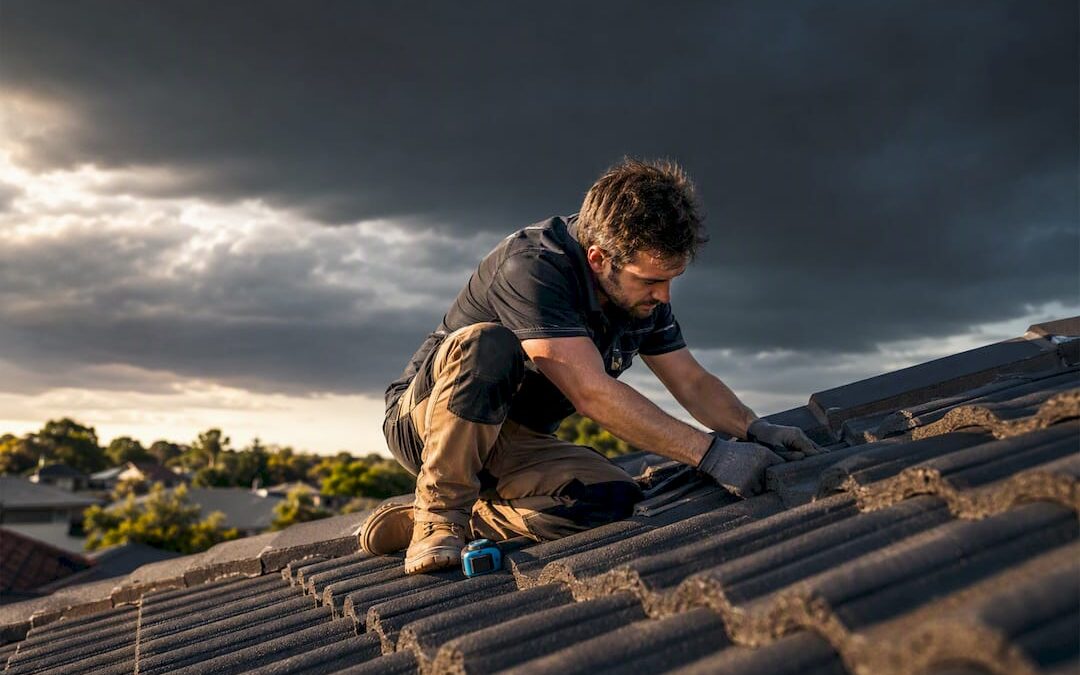
The fastest path to more roofing leads is a Google Business Profile that’s fully built out and collecting fresh reviews, paired with a fast mobile site and one genuinely strong service page. Fix those three things first. Content, backlinks, and technical polish come next, and they’re what keep those rankings once you’ve earned them, including in AI-generated answers.
TL;DR:
- Claim and verify your Google Business Profile, request reviews regularly, and fix click-to-call and mobile speed issues within the first 30 days.
- Prioritize service and location pages that include specific details, real project content, and realistic pricing to boost rankings and conversions.
- Focus on local keyword research with high-intent service and storm damage terms, avoiding broad or non-local searches to target calls effectively.
- Build a fast, mobile-friendly website with proper schema markup, optimized titles, and structured data to improve visibility and usability for immediate leads.
- Sustain review velocity, local backlinks, and citation consistency over 3 to 6 months to develop durable rankings and dominate the Map Pack in your area.
Table of Contents
- What Is Roofer SEO and Why Does It Matter?
- What Should You Fix First: A 30/60/90 Day Checklist
- How Do You Research Keywords for a Roofing Website?
- How Do You Build Service Pages and Location Pages That Rank?
- How Do You Optimize Your Google Business Profile for Roofing Leads?
- What On-Page and Technical Fixes Actually Move Rankings?
- What Content Should Roofing Companies Publish and When?
- How Do Roofers Earn Local Backlinks and Citations?
- How Long Does Roofer SEO Take to Show Results, and What Does It Cost?
- How Do You Handle Negative Reviews Without Hurting Your Rankings?
- Which Schema Types Actually Help a Roofing Website?
- How Should Roofers Use Social Media to Support Local SEO?
- What Mobile Design Choices Matter Most for Roofing Websites?
- Why Fundamentals Still Win in the Age of AI Search
- Getting Help With Roofing SEO and Website Performance
- Sources
What Is Roofer SEO and Why Does It Matter?
Roofer SEO is the practice of making a roofing company’s website and Google Business Profile visible to people searching for roof repair, replacement, or inspection in their area. It’s a subset of local SEO, but with its own quirks: seasonal demand spikes, insurance-driven searches, and a buyer who often needs a contractor within days, not weeks. Roofing contractor SEO and roofing company SEO get used interchangeably, and they mean the same thing here.
The stakes are higher than for a lot of local service categories. Most searches for “roof repair near me” or “roofing contractor city]” trigger the Map Pack, and [that pack sits above the organic results and pulls a disproportionate share of clicks. If your business isn’t in it, you’re competing for scraps further down the page. A homeowner with a leak doesn’t scroll past the first three listings. They call one of them.
That’s the framing for everything below. This isn’t a landscaping SEO or landscaper SEO guide dressed up with different keywords, though the local-search mechanics overlap. It’s built around what actually moves the needle for a service-area roofing business: profile completeness, review velocity, page-level relevance, and enough technical health that Google (and now AI search tools) can find and trust your site.
What Should You Fix First: A 30/60/90 Day Checklist
Sequencing matters more than most roofers realize. Chasing blog content before your Google Business Profile is complete is like advertising a store that’s still locked. Here’s the order that produces leads fastest, based on the kind of phased rollout that tends to work for roofing companies.
Days 1 to 30: Foundation and quick wins
- Claim and fully verify your Google Business Profile, including service areas and every relevant business category.
- Start actively requesting reviews from recently completed jobs, aiming for a steady weekly trickle rather than a one-time push.
- Fix click-to-call functionality on mobile. Test it yourself from a phone; broken tap-to-call is more common than you’d think.
- Run your homepage through a mobile speed test and resolve the worst offenders (usually uncompressed images).
Days 31 to 60: Build the assets that convert
- Publish one fully optimized service page (roof replacement, storm damage repair, whatever drives the most calls) with real pricing ranges and process detail.
- Publish one genuine location page for a specific city or service area you want to rank in.
- Add LocalBusiness and Service schema markup, and clean up title tags and meta descriptions across the site.
Days 61 to 90: Scale and measure
- Publish two or three buyer-intent blog posts tied to searches people actually make before hiring.
- Start local link outreach to suppliers, associations, and local press.
- Set up call tracking and form attribution so you can see which channel actually produced the lead.
Pro Tip: Don’t wait until day 45 to ask for your first review. Ask the same week you finish a job, while the roof is fresh in the customer’s mind and the relief of a fixed leak is still real.
This sequence isn’t arbitrary. Starting with GBP and technical fixes before moving into service pages and content produces visible movement in weeks rather than months, which matters when you’re trying to justify continued investment to yourself or a business partner.
How Do You Research Keywords for a Roofing Website?
Roofing searches split cleanly into three buckets, and mixing them up is the single most common keyword mistake contractors make. Service keywords like “roof replacement cost” or “emergency roof repair” carry the highest buying intent and should get priority in your keyword mapping. Problem keywords, things like “roof leaking after rain” or “shingles curling”, represent people still diagnosing an issue. Location keywords (“roofer in [suburb]”) add geographic specificity but convert poorly on their own, since they say nothing about what the searcher actually needs.
A simple spreadsheet keeps this organized. Use columns for the keyword itself, its intent bucket (service, problem, or location), estimated monthly search volume, ranking difficulty, and the specific page you’ll target it with. That last column is the one most roofing sites skip, and it’s why they end up with five blog posts all vaguely competing for the same term instead of one clear ranking page per topic.
A few keyword patterns worth prioritizing:
- “[Service] + [city]” combinations, like “metal roof installation Fremantle,” which combine buying intent with geographic relevance.
- Insurance and storm-specific terms such as “storm damage roof claim” or “hail damage roof inspection,” which spike hard and fast.
- Comparison queries like “metal roof vs shingle roof cost,” which capture research-stage homeowners before they’ve picked a contractor.
- Emergency and urgency terms: “emergency roof leak repair,” “same day roof repair.”
Avoid chasing broad, non-local terms like “best roofing materials” unless you’re building a genuinely authoritative content hub. A roofer in a single metro area competing for a national informational query is spending effort on traffic that will never call.
Roofing keyword intent breaks into three groups, and they don’t convert equally. Service-level searches with buying intent consistently outperform broader problem or location queries for lead generation, which is why your top three or four pages should target service keywords, not blog-style informational ones.
How Do You Build Service Pages and Location Pages That Rank?
Every service page needs to do two jobs at once: rank for a specific search and convert the person who lands on it. That means it needs more than a paragraph and a contact form. A page built for “roof replacement” should include a clear headline stating the service and area, a breakdown of the process from inspection to cleanup, the materials used, a realistic project timeline, warranty terms, and a price range, even a rough one. Real job photos from your own crews do more for trust than any amount of copy. Close with a specific call to action, not a generic “contact us.”
Location pages need the same rigor, and this is where most roofing sites cut corners. A page that swaps “Fremantle” for “Melville” in an otherwise identical template is thin content, and Google increasingly treats these city-swap pages as low-value duplicates. A real location page mentions specific neighborhoods, references actual completed jobs in that area, and ideally includes a photo or two from work done there. If you don’t have enough distinct content to make a location page genuinely different, don’t build one yet. One strong page beats five weak ones.
A few structural rules worth following:
- Build one dedicated page per service (roof replacement, repair, inspection, gutter work) rather than bundling everything onto a single “services” page.
- Build location pages only for areas where you have real project history to draw on.
- Link to service and location pages from your homepage navigation and from relevant blog posts, so link equity flows to the pages actually designed to convert.
- Keep pricing ranges realistic and updated; a page quoting 2019 prices signals neglect.
Pro Tip: Write the price range section like you’re answering the phone. If a caller usually hears “somewhere between X and Y depending on the roof size and material,” put roughly that same range on the page. It filters out tire-kickers and builds trust with serious buyers.
How Do You Optimize Your Google Business Profile for Roofing Leads?
Google’s local algorithm weighs relevance, distance, and prominence, and GBP completeness and category selection feed directly into that relevance signal. Getting the profile right isn’t optional groundwork. It’s the highest-leverage move available to most roofing businesses.
Set up categories and attributes correctly:
- Choose “Roofing Contractor” as your primary category. It’s the most specific match Google offers, and specificity wins over broader categories like “General Contractor.”
- Add secondary categories only if they’re genuinely accurate (e.g., “Gutter Cleaning Service” if you actually offer that).
- Fill in every service attribute Google offers: licensed, insured, free estimates, emergency service, and so on.
- Upload real photos regularly, not stock images. Before-and-after shots of actual jobs perform best.
Build review velocity, not just review count. Consistent, recent reviews can outrank a competitor with a larger total but stagnant recent activity, and BrightLocal’s research on local consumer behavior backs up why this matters beyond rankings: reviews are often the first thing a homeowner reads before ever visiting your website.
- Ask within 48 hours of job completion, while satisfaction is highest.
- Use a short, specific script: “We’re glad the repair worked out. Would you mind leaving a quick Google review? It genuinely helps other homeowners find us.”
- Follow up once, politely, a week later if there’s no response. Don’t ask twice after that.
- Respond to every review, positive or negative, within a few days.
Audit your citations for NAP consistency. Your name, address, and phone number need to match exactly across Google, Bing Places, Apple Maps, Yelp, Angi, and any roofing-specific directories in your market. Check for old addresses or phone numbers lingering on directory sites you forgot existed. Inconsistent NAP data is a quiet ranking killer because it makes Google less confident about which business entity it’s actually looking at. A step-by-step GBP setup resource can walk you through the fields most owners miss.
What On-Page and Technical Fixes Actually Move Rankings?
Most roofing leads now arrive on a phone screen, which means mobile speed, mobile usability, structured data, and clean indexing are the technical signals that matter most for this industry specifically. Get these wrong and everything else you do is fighting an uphill battle.
On-page fundamentals:
- Title tags should follow a pattern like “[Service] in [City] | [Business Name],” kept under 60 characters so they don’t truncate in search results.
- Meta descriptions should include the service, a trust signal (licensed, family-owned, 20 years), and a soft call to action, without stuffing keywords unnaturally.
- Use one H1 per page that states the core topic plainly, then structure H2s around subtopics like process, pricing, and service area.
- Place your target keyword naturally in the first hundred words, not forced into a sentence where it reads awkwardly.
Technical priorities, roughly in order of impact:
- Core Web Vitals, particularly Largest Contentful Paint, which usually suffers from unoptimized hero images on roofing sites full of large photos.
- Mobile-first design that doesn’t require pinch-zooming to read pricing tables or tap a phone number.
- Compressed images across every service and location page; uncompressed job photos are the most common speed killer in this industry.
- A clean, updated XML sitemap submitted through Google Search Console.
- Correct canonical tags, especially if you have similar service pages that could be read as duplicates.
Schema markup worth adding, and where roofers get it wrong:
LocalBusiness schema should carry your name, address, phone, hours, and service area boundaries exactly as they appear on your GBP listing. Service schema should be applied per service page, describing what that specific service includes rather than a generic blanket description copied across every page. AggregateRating schema can display your review score in search results, but only implement it if you’re pulling genuine review data. Fabricated or inflated ratings in schema markup violate Google’s structured data guidelines and can trigger a manual penalty.
The most common mistake is applying the same schema block to every page on the site, which tells Google nothing distinct about each one. The second most common mistake is skipping schema entirely because it feels technical. Practical roofing SEO guidance from GAF consistently points back to the same basics: clear keyword targeting, useful content, solid local SEO, and a site that’s easy to navigate. None of that requires a developer on retainer, but it does require someone to actually do it.
What Content Should Roofing Companies Publish and When?
Content works for roofers when it answers a question someone is actively researching before they call a contractor, not when it’s generic filler written to hit a word count. The formats that convert consistently include cost guides (“How Much Does a Roof Replacement Cost in [Region]”), damage-identification posts (“5 Signs Your Roof Needs Repair Before Winter”), insurance claim walkthroughs, material comparison pieces, and spotlights on real completed projects in your service area.
Timing is where most roofing companies leave money on the table. Storm-response and insurance-claim pages need to be published and indexed before the season that drives the searches, not during it. Search volume for “storm damage roof claim” or “hail damage inspection” spikes hard right after a weather event, and Google needs time to crawl and rank new pages. If you publish the week of the storm, you’re already too late; competitors who pre-built that page months earlier capture the traffic instead.
A practical publishing rhythm:
- Publish one cost or comparison guide monthly, targeting a specific service or material.
- Publish storm and insurance-related pages at least six to eight weeks before your region’s typical peak season.
- Update seasonal pages annually rather than letting them go stale with outdated pricing or old photos.
- Repurpose each blog post into two or three social captions and one email to past customers, so a single piece of content earns multiple touches instead of one.
Treat your storm and insurance pages as permanent landing assets, not one-off posts you write and forget. They’ll sit dormant for months and then suddenly matter a great deal the week a hailstorm rolls through your area.
How Do Roofers Earn Local Backlinks and Citations?
Backlinks from relevant, authoritative sites remain one of the strongest ranking factors in search, and roofing companies have more natural link opportunities than they usually realize. The trick is knowing who to ask and what to offer in return.
Worthwhile outreach targets include material suppliers who often maintain contractor directories, local council or chamber of commerce business listings, insurance agents who refer roofing work and might link back from a resources page, real estate agents who need a trusted roofer for pre-sale inspections, local news outlets covering weather damage stories, and roofing or building trade associations.
A few tactics that actually produce links rather than polite ignoring:
- Offer to write a short guest post for a supplier’s blog about material selection in exchange for a link back to your site.
- Sponsor a local youth sports team or community event; most sponsorship pages link to sponsors’ websites.
- Pitch local journalists directly after a storm, offering expert commentary on roof damage assessment. Reporters need quotable sources fast.
- Ask suppliers you buy from regularly if they maintain a “certified installer” or “preferred contractor” directory, and get listed.
Pro Tip: Track every link you earn in a simple spreadsheet with the source, date, and a quick note on relevance. A link from a local news site or supplier page is worth far more than a random directory nobody visits, even if the directory link was easier to get.
For readers wanting a broader look at local search tactics beyond roofing specifically, Sun State Digital’s SEO resources cover additional local search fundamentals worth reviewing.
How Long Does Roofer SEO Take to Show Results, and What Does It Cost?
Track four numbers above everything else: phone calls, form submissions, booked jobs, and cost per lead. Rankings are a leading indicator, not the goal. A page ranking on page one that generates zero calls is worth less than a page ranking on page two that converts consistently. Attributing leads to specific channels, rather than judging SEO purely by keyword position, gives a far more honest read on whether the work is paying off.
Set up call tracking with a dedicated number for organic and GBP traffic, and tag your contact forms so submissions show their source. Without this, you’re guessing whether a lead came from your ranking or a referral.
Realistic timelines depend heavily on your market’s competition level:
- GBP optimization and review velocity: noticeable Map Pack movement in 30 to 60 days for most markets, faster in low-competition suburbs.
- Service and location page rankings: meaningful organic movement in 3 to 6 months.
- Content and link-building compounding effects: 6 to 12 months for durable, defensible rankings that hold up against competitor churn.
Budget expectations vary widely by market size and competition, so treat any number you hear as a rough starting point rather than a fixed rule. Smaller or lower-competition markets can see solid results from a leaner, focused effort concentrated on GBP, one strong service page, and consistent reviews. Larger metro markets with aggressive competitors typically require sustained content and link investment to compete for the top Map Pack spots. If you’re not seeing movement after a genuine 90-day effort focused on the fundamentals above, that’s usually the signal to bring in outside help rather than keep guessing.
How Do You Handle Negative Reviews Without Hurting Your Rankings?
A single bad review doesn’t sink a roofing business, but how you respond to it gets read by every future customer deciding whether to call. Ignoring a negative review reads as indifference. Responding defensively reads worse.
The right approach is calm, specific, and public. Acknowledge the customer’s experience without admitting fault you don’t owe, offer to resolve the issue offline, and leave the emotional appeals out of it. Something like: “We’re sorry to hear the repair didn’t meet expectations. We’d like to make this right, please call our office directly at [number] so we can look into it.” That response does two things: it shows future customers you take problems seriously, and it moves the actual conflict off the public review thread.
Never argue with a reviewer in the comments. Never offer a refund or resolution publicly that you haven’t cleared with the customer first, since it can look like you’re negotiating in front of an audience. If a review violates Google’s policies, contains false claims, profanity, or clearly wasn’t a real customer, flag it for removal through Google’s review management tools rather than trying to argue it down in the response.
Build a habit of checking new reviews weekly rather than reactively. A fast response time on a bad review, ideally within 48 hours, signals to both the reviewer and every future reader that your business actually pays attention. Combined with steady positive review velocity from happy customers, one or two negative reviews stop being a crisis and just become part of a normal, believable review profile.
Which Schema Types Actually Help a Roofing Website?
Generic advice says “add schema markup,” but roofing sites benefit from a specific combination that most contractors never fully implement. LocalBusiness schema (or its more specific RoofingContractor subtype where supported) should carry your business name, address, phone number, hours, and geographic service area, matching your Google Business Profile exactly.
Service schema belongs on every individual service page, describing that specific offering, whether it’s roof replacement, storm damage repair, or gutter installation, rather than a copy-pasted block repeated across the site. This is where most roofing sites fail: they apply one generic schema snippet sitewide instead of tailoring it page by page.
Product schema applies less often for roofers since you’re selling a service, not a packaged product, but it can be useful if you sell specific branded roofing systems or materials as standalone offerings with fixed pricing.
AggregateRating schema displays your review score directly in search results as star ratings, which noticeably improves click-through rates. Only implement this with real, current review data pulled from your actual GBP or review platform. Google’s structured data guidelines explicitly prohibit fabricated or manually inflated ratings, and getting caught risks a manual action against your entire site, not just the offending page.
FAQPage schema on service pages, wrapped around genuine common questions like “how long does a roof replacement take,” can also earn extra visibility in search results and increasingly feeds AI-generated answer summaries.
How Should Roofers Use Social Media to Support Local SEO?
Social media doesn’t directly move your Google rankings, but it feeds the signals that do. Every job photo posted to Facebook or Instagram is a chance to reinforce the same trust signals your GBP profile relies on: real work, real locations, real customers.
Cross-post your best project photos to social platforms with location tags for the neighborhood the job was done in. This builds a public record of local activity that reinforces the geographic relevance Google already weighs through your GBP listing. When customers tag your business in their own posts or share a photo of finished work, that engagement extends your reach into networks you’d never reach through search alone.
Use social platforms to funnel people toward leaving Google reviews rather than treating platform reviews as a substitute. A glowing Facebook comment doesn’t help your Map Pack ranking, but a direct message pointing a happy customer to your Google review link does. Some roofing companies build a simple follow-up sequence: thank-you post on social media, then a direct message with the review link a day or two later.
Local Facebook groups and community pages are also worth monitoring. Homeowners in storm-affected neighborhoods often post directly to community groups asking for contractor recommendations, and a genuine, non-salesy reply with a link to your relevant storm-damage service page can generate a lead faster than any paid ad.
What Mobile Design Choices Matter Most for Roofing Websites?
A roofing website’s mobile experience gets judged in seconds, usually by someone standing in their driveway looking up at a damaged roof. Every design decision should assume that context.
Click-to-call needs to work flawlessly and appear above the fold on every page, not buried in a footer or hidden behind a hamburger menu. Test it yourself, on your own phone, regularly. Broken tap-to-call links are more common on roofing sites than almost any other design flaw, often because a redesign quietly broke the link formatting.
Forms should be short. A roofer’s mobile lead form doesn’t need ten fields; name, phone, service needed, and a rough description covers what you need to call back and qualify the lead. Every extra field is a chance for someone in a hurry to abandon the form.
Image-heavy service pages, which most roofing sites are, need aggressive compression without sacrificing the visual proof that job photos provide. A slow-loading gallery of roof photos defeats its own purpose if the visitor gives up before the images render.
Font sizes and button targets need enough space for someone tapping with a thumb, not a mouse cursor. Pricing tables and process breakdowns that require horizontal scrolling on mobile are a common and easily fixed frustration. Test your actual site on an actual phone regularly, not just in a desktop browser’s mobile preview mode, since real devices surface problems simulators miss.
Why Fundamentals Still Win in the Age of AI Search
The panic around AI Overviews and answer engines has convinced a lot of roofing companies that everything they knew about SEO is obsolete. It isn’t. The businesses that show up in AI-generated answers are almost always the ones with strong organic rankings and complete, trusted GBP signals already. AEO isn’t a separate discipline you bolt on. It’s a byproduct of doing the fundamentals well.
That’s why the investment sequence in this guide starts with GBP and reviews, not content. Chase AI visibility before your profile is complete and your site loads fast, and you’re building on nothing. Speed and service pages come next because they capture demand you’re already generating. Content and links come last because they compound, but only once the foundation can actually hold the weight.
As for whether to hire an agency or handle this in-house: if you have the time to execute the 30/60/90 sequence consistently and the patience to wait out the technical fixes, doing it yourself is entirely workable for a smaller operation. An agency earns its cost when you lack the hours, need faster technical execution, or you’re competing in a metro market where every competitor is already doing this well.
— Steve Doig
Getting Help With Roofing SEO and Website Performance
Some digital marketing agencies exist for roofing business owners who’d rather hand the technical grind to someone who does it daily than teach themselves schema markup on a Saturday. The advantage over piecing together your own fixes is straightforward: having one team handle your Google Business Profile setup, site speed, and service page structure together, instead of juggling multiple freelancers who never talk to each other.
Some service providers offer local SEO strategy and GBP optimization, WordPress website design and development for roofing companies whose sites are slow or dated, and speed optimization for the mobile experience that most roofing leads depend on. Before reaching out, gather access to your Google Business Profile, your Google Analytics or Search Console account if you have one, a handful of real job photos, and a clear sense of which suburbs or cities matter most to your business.
If your current site is genuinely holding you back and you need something rebuilt properly rather than patched, the website design and development page walks through what that process looks like. Reach out for a straightforward look at where your current setup stands and what fixing it first would actually involve.
Sources
Recommended
- SEO Services Small Business a Guide to Local Growth
- Local SEO for Small Business: Boost Your Rankings
If this post raised some questions feel free to ask me a question