
Finding the right balance between performance, price, and support for your website's hosting can feel like an impossible task. Shared hosting is often too slow and restrictive, while dedicated servers are an expensive over-commitment for most small to medium Australian businesses. This is where a Virtual Private Server (VPS) offers a powerful middle ground, giving you dedicated resources and greater control without the enterprise-level price tag. However, the market is crowded with options, making it difficult to distinguish genuine value from a false economy. This is especially true when searching for cheap vps providers, where low prices can sometimes hide poor performance, slow support, or limited features.
This guide is designed to cut through that noise. We've compiled a detailed comparison of the top affordable VPS providers, focusing on the specific needs of Australian businesses running WordPress sites. We go beyond just listing prices, offering a practical analysis of each provider's real-world performance, server locations in the Australia/APAC region, and the quality of their customer support.
For each provider on our list, you will find a straightforward breakdown of their strengths and weaknesses, ideal use cases, and key considerations like managed versus unmanaged services. We've included screenshots and direct links to help you evaluate each option efficiently. Our goal is to give you the clear, practical information you need to choose the best VPS for your budget and business, and to help you decide when a more managed WordPress hosting solution might be the better path forward.
1. BinaryLane
For Australian businesses prioritising low latency and local data sovereignty, BinaryLane is a standout choice among cheap VPS providers. As an Australian-owned company with data centres in Perth and Sydney, it offers exceptionally fast connectivity for local users. This makes it ideal for hosting WordPress sites, small e-commerce stores, or applications where response time for an Australian audience is critical. Their pricing model is a major drawcard, starting at just a few dollars per month and billed hourly, providing fantastic flexibility for developers testing projects or businesses with fluctuating needs.
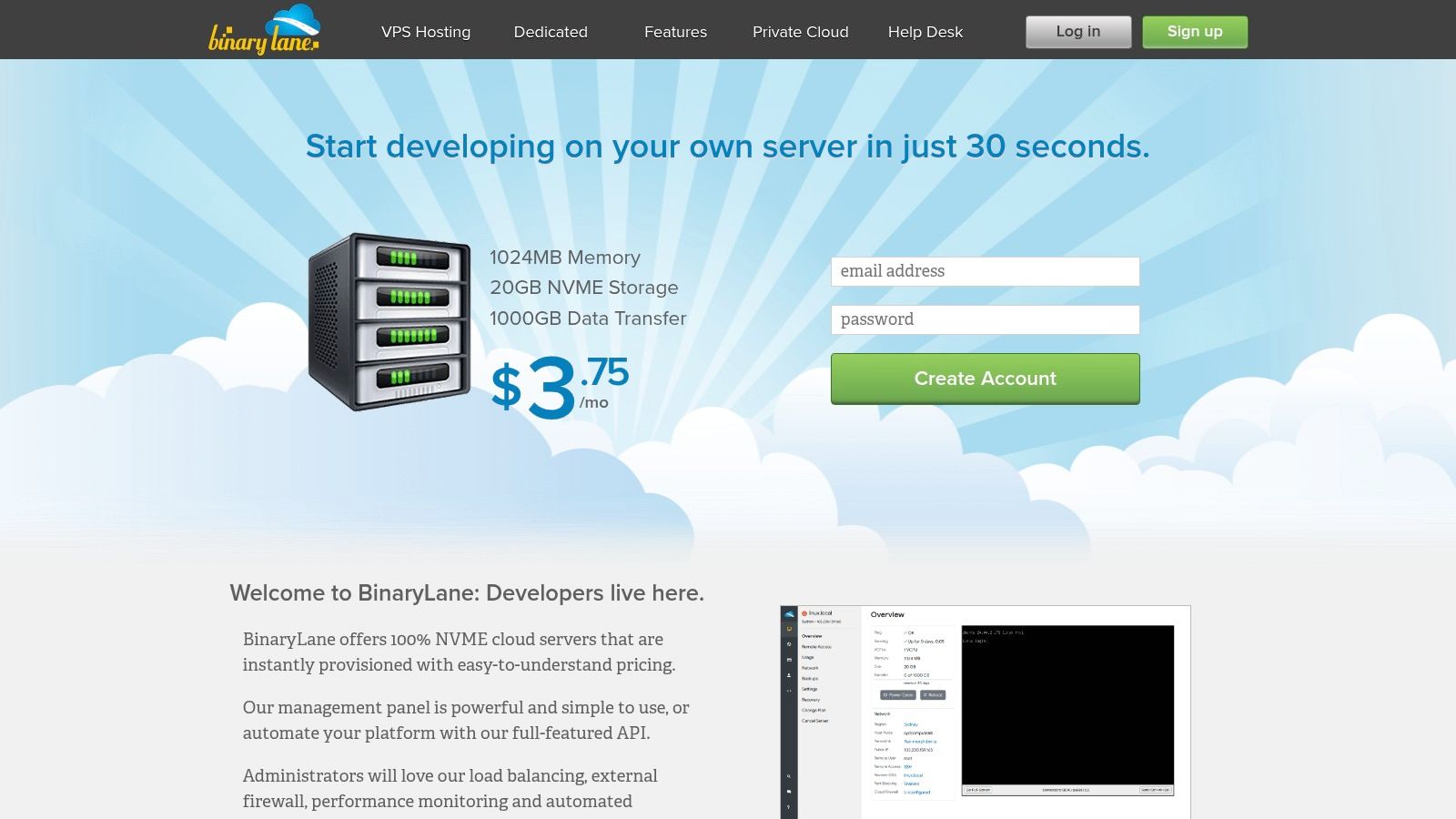
The platform’s control panel is clean and straightforward, avoiding the complexity found in larger cloud providers. You can independently scale resources like RAM, CPU, and disk space, and all plans use high-performance NVMe storage. Automated full-disk backups provide a solid safety net for your data.
Practical Considerations & Limitations
BinaryLane's primary strength is its focused, high-performance infrastructure for the Australian market. However, its ecosystem is smaller than global giants like AWS or Google Cloud, meaning fewer integrated managed services like databases or object storage. The included bandwidth on the smallest plans is also modest, so high-traffic sites may need to budget for extra data transfer. For those new to server management, remember this is an unmanaged service. You are responsible for all software installation, security, and maintenance. If this sounds daunting, exploring options for cheap web hosting in Australia that includes management might be a better starting point.
- Best For: Developers and small businesses needing affordable, high-speed VPS hosting with Australian data centres.
- Pros: Very low entry cost, excellent performance in Australia, simple control panel.
- Cons: Limited managed add-ons, modest included bandwidth on entry-level plans.
- Website: binarylane.com.au
2. Vultr
For businesses needing a global reach without the complexity of major cloud providers, Vultr presents a compelling option among cheap VPS providers. With a data centre in Sydney and dozens more worldwide, it's an excellent choice for applications that serve both Australian and international audiences. Vultr balances affordability with a rich feature set, making it a powerful middle ground for developers and businesses that need more than a basic local server. Their platform is known for its extremely fast deployment times, allowing you to spin up a new server in under a minute.
A key differentiator for Vultr is its range of compute tiers. You can choose from standard instances for general workloads or pay a small premium for "High Frequency" instances with faster CPUs and NVMe storage, ideal for busy WordPress or e-commerce sites. The control panel is developer-centric yet straightforward, offering one-click app installations for popular software and the ability to upload custom ISOs.
Practical Considerations & Limitations
While Vultr's base instance pricing is very competitive, the total cost can increase with add-ons. Features like automated backups, snapshots, and even outbound data transfer are billed separately. It's important to factor these into your budget, as they are essential for most production environments. Like many unmanaged providers, support is primarily self-service through documentation and a ticketing system. You are fully responsible for server security, updates, and configuration, including setting up secure file transfers. For those unfamiliar with the process, understanding how the FTP protocol and port numbers work is a fundamental first step. If this hands-on approach seems too demanding, a managed hosting solution might be a more suitable choice.
- Best For: Businesses requiring a global presence and developers who want flexible, high-performance compute options.
- Pros: Broad global footprint with a Sydney region, multiple performance tiers, fast server deployment.
- Cons: Add-on costs for backups and other services can add up, support is more self-service.
- Website: vultr.com
3. Linode (Akamai)
Linode, now part of Akamai, has a long-standing reputation in the developer community as one of the original cheap VPS providers, known for its straightforward pricing and reliable performance. With a data centre in Sydney, it is a strong contender for Australian users who need predictable costs and a robust platform. Its famous US$5/month "Nanode" plan offers 1 GB of RAM and an NVMe-powered server, providing an excellent entry point for small projects, development environments, or low-traffic WordPress sites.
The platform is praised for its clean interface and extensive documentation, making it accessible even for those with moderate technical skills. Linode's generous data transfer allowances are a key differentiator; all plans include a significant amount of free egress, which can lead to substantial savings compared to other cloud providers where bandwidth costs can quickly add up. This makes it a great choice for applications that serve a decent amount of content.
Practical Considerations & Limitations
While Linode excels with its core compute offerings, its ecosystem of managed Platform-as-a-Service (PaaS) add-ons is less extensive than that of giants like AWS or Google Cloud. You'll find managed databases and object storage, but not the same breadth of integrated services. For businesses that need an unmanaged server with great fundamentals, this isn't a problem. However, remember that you are entirely responsible for server administration, including security patches, software updates, and backups. If managing a server environment seems complex, a managed WordPress hosting solution may be a more suitable path.
- Best For: Developers and businesses looking for a reputable, low-cost VPS with predictable billing and generous bandwidth.
- Pros: Very competitive pricing on small plans, excellent performance, generous egress allowances, strong community and documentation.
- Cons: Fewer integrated managed services than hyperscale clouds, price adjustments on some higher-tier plans have occurred.
- Website: linode.com
4. DigitalOcean
For developers and businesses seeking a balance between affordability, simplicity, and a scalable ecosystem, DigitalOcean is a major global player among cheap VPS providers. Its virtual private servers, known as "Droplets," are famous for their straightforward setup and predictable pricing, starting from just a few US dollars per month. The platform’s SYD1 data centre in Sydney ensures low-latency performance for Australian users, making it a strong contender for hosting WordPress sites or applications targeting a local audience.
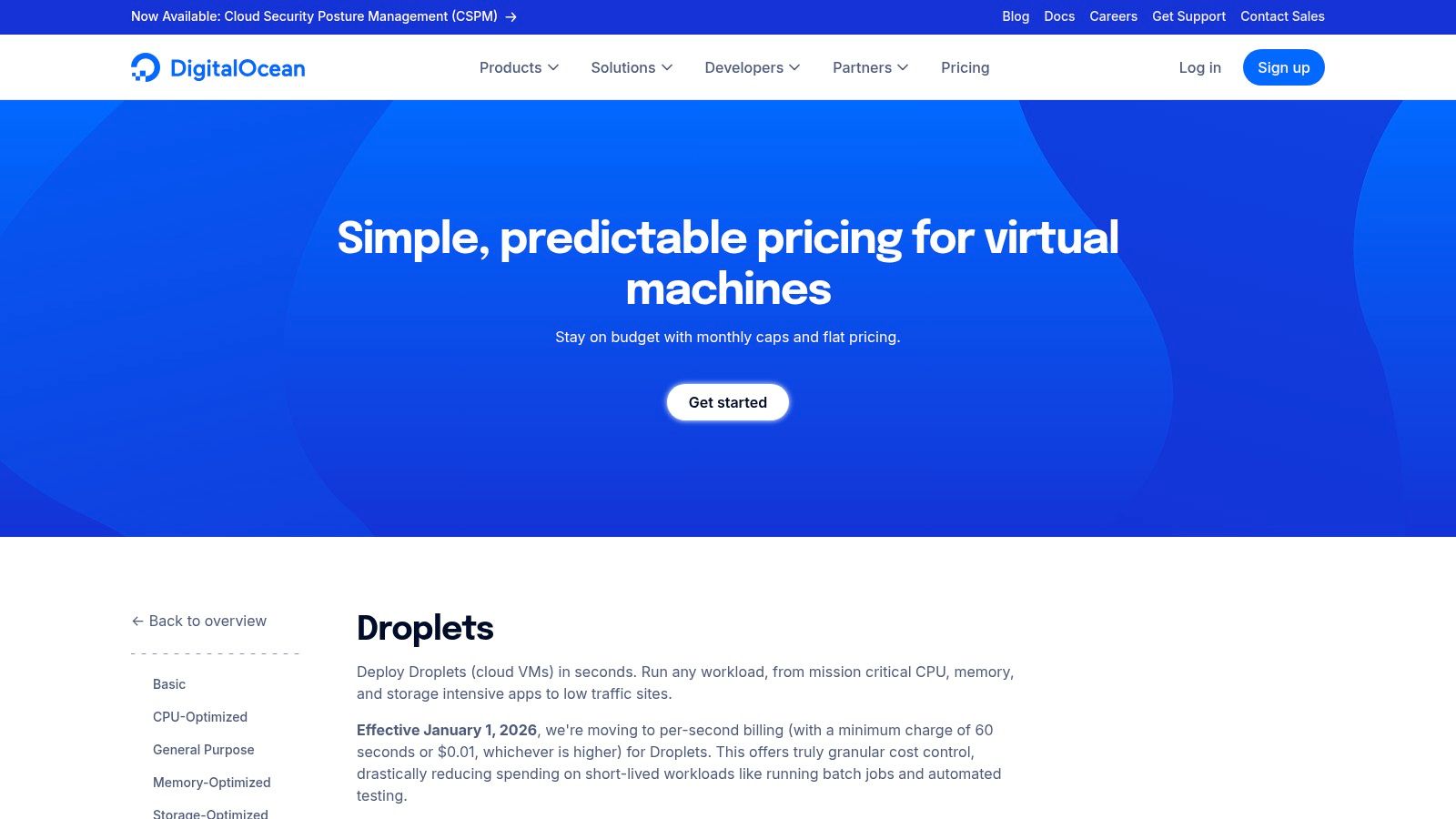
What sets DigitalOcean apart is its rich library of tutorials and a massive community, making it incredibly beginner-friendly for those new to server management. Beyond basic Droplets, it offers an integrated suite of powerful tools like Managed Databases, Kubernetes (DOKS), Spaces Object Storage, and the App Platform for simple deployments. This allows you to start small and add advanced services as your project grows without migrating providers. The benefits of cloud hosting extend well beyond simple virtual servers, and DigitalOcean makes these features accessible.
Practical Considerations & Limitations
DigitalOcean’s main appeal is its user-friendly interface and extensive documentation, which lowers the barrier to entry for cloud computing. However, while base Droplet pricing is competitive, the total cost can increase significantly once you add services like managed databases, load balancers, or regular snapshots for backups. It’s also worth noting that specific Droplet plans or entire regions can sometimes experience capacity constraints, limiting availability. As this is an unmanaged service, you are still responsible for your server's security, software updates, and overall maintenance.
- Best For: Startups and developers who want a simple entry point to the cloud with the option to scale using managed services.
- Pros: Extremely beginner-friendly with vast tutorials, predictable Droplet pricing, integrated managed services.
- Cons: Add-ons (load balancers, managed DBs) increase total cost, occasional capacity constraints on specific plans.
- Website: www.digitalocean.com/pricing/droplets
5. UpCloud
UpCloud positions itself as a performance leader in the cloud hosting market, making it an excellent choice for businesses that need powerful and reliable disk performance. Its reputation is built on delivering exceptionally fast and consistent I/O, which is ideal for database-heavy applications, busy e-commerce stores, or WordPress sites with complex queries. With a data centre in Sydney (AU-SYD1), it provides low-latency connectivity for Australian users, making it a strong contender among cheap VPS providers for performance-critical projects.
The platform’s hourly billing and flexible server configurations allow you to create custom plans, ensuring you only pay for the exact resources you need. Pricing is transparent, with a clear calculator available on their site to avoid surprises. Free private networking between your cloud servers is another valuable feature, allowing for secure internal communication without consuming public bandwidth.
Practical Considerations & Limitations
While UpCloud excels in performance, particularly disk I/O, its global footprint is smaller than giants like DigitalOcean or Vultr. This may be a factor if you require a vast network of international data centres. It also offers fewer first-party managed services, such as managed databases or object storage, compared to larger cloud platforms. As an unmanaged VPS service, you are responsible for server administration, including software installation, security patching, and ongoing maintenance. This self-managed nature means it’s best suited for users with some technical expertise.
- Best For: Businesses with I/O-intensive workloads like large databases or e-commerce sites needing top-tier disk performance.
- Pros: Outstanding I/O performance, transparent hourly billing, customisable plans, and a Sydney data centre.
- Cons: Smaller global network than competitors, limited range of built-in managed services.
- Website: upcloud.com/pricing-usd
6. Kamatera
Kamatera brings enterprise-grade cloud flexibility to the affordable VPS market, offering an excellent option for businesses that require highly specific server configurations. With a data centre in Sydney equipped with NVMe storage, it delivers strong performance for Australian audiences. Its pricing model is built for agility, with both hourly and monthly billing, making it a great choice for developers who need to spin up environments for testing or for businesses scaling their resources precisely. The ability to fine-tune every aspect of your server, from CPU cores to RAM and storage, sets it apart from more rigid plans.
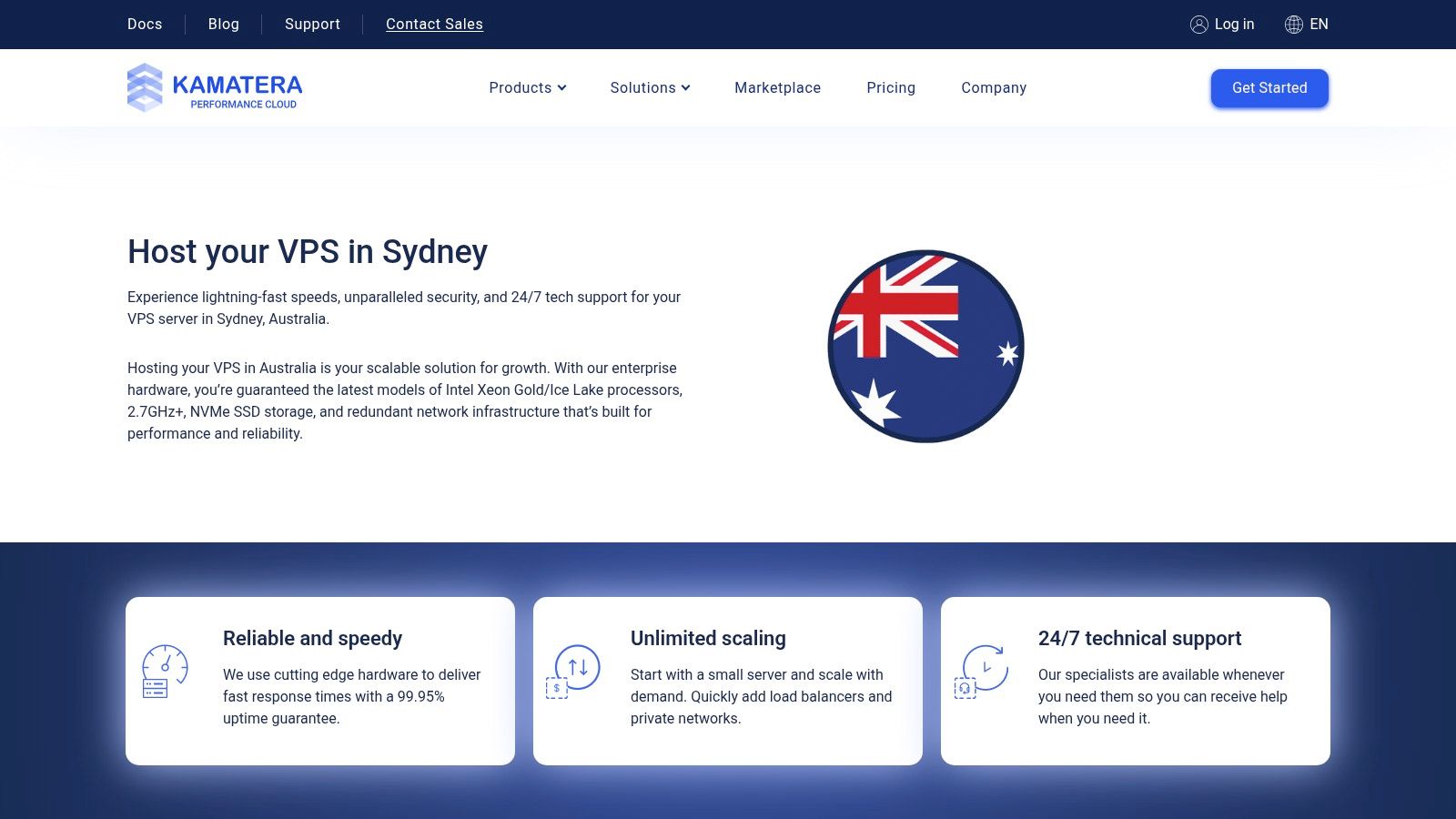
The platform supports a wide array of operating systems and one-click application deployments through its marketplace, simplifying the initial setup. Kamatera also stands out by offering a generous 30-day free trial, allowing users to thoroughly test the service's performance and interface before committing.
Practical Considerations & Limitations
Kamatera's strength is its extreme customisation, but this comes with a learning curve. The control panel feels more technical and enterprise-focused compared to simpler, beginner-friendly interfaces. Newcomers to server administration might find it overwhelming. While the base server costs are competitive, essential add-ons like firewalls and automated backups are priced as separate line items. This means the final monthly cost can be higher than the advertised entry price if you need a complete, secure setup. It’s one of the few cheap VPS providers where you need to be mindful of these extra costs from the start to avoid budget surprises.
- Best For: Tech-savvy users and businesses needing granular control over server resources and an Australian data centre.
- Pros: Highly customisable server configurations, 30-day free trial, Sydney data centre with NVMe.
- Cons: Interface is less beginner-friendly, add-ons like backups and firewalls cost extra.
- Website: kamatera.com
7. Amazon Lightsail
For those intrigued by the power of Amazon Web Services (AWS) but intimidated by its complexity, Amazon Lightsail presents a simplified entry point. It's one of the more accessible cheap VPS providers for users who want the reliability of AWS infrastructure without needing to navigate the intricate EC2 dashboard. Lightsail packages compute, storage, and networking into predictable, flat-rate monthly bundles, making it a great option for running WordPress sites, test environments, or small applications with a clear, capped budget. The Sydney region is available, ensuring good performance for an Australian audience.
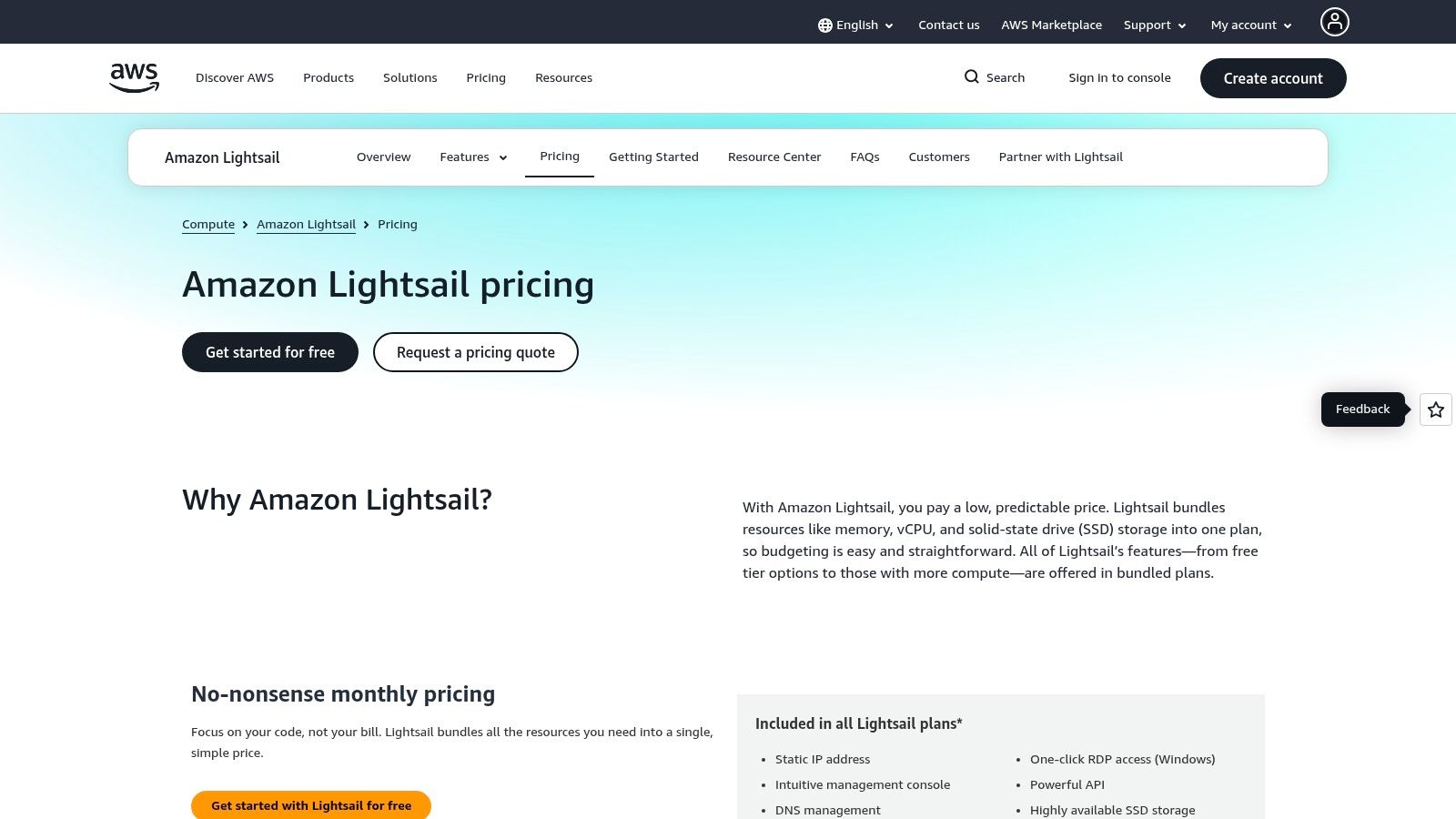
The platform offers pre-configured instance blueprints for common applications like WordPress, and you can easily add services such as managed databases or content delivery networks. This makes it a powerful stepping stone into the broader AWS ecosystem, allowing you to connect your simple VPS to more advanced services later on. Snapshots and DNS management are also built-in, providing essential tools directly within the clean interface.
Practical Considerations & Limitations
While Lightsail’s main advantage is its predictable pricing, it's crucial to watch the data transfer allowances. The included bandwidth quotas for the Sydney (APAC) region are often lower than those in the US or Europe for the same price. Exceeding these limits can lead to overage charges, which can catch new users by surprise. Although it's simpler than EC2, Lightsail is still an unmanaged service; you are responsible for server security and software updates. It's also less flexible than full-blown EC2, so if you need highly customised CPU or memory configurations, you might find it restrictive.
- Best For: Users familiar with AWS or wanting a simple, fixed-price entry point to the AWS ecosystem.
- Pros: Predictable monthly billing, access to the robust AWS network, simple interface compared to EC2.
- Cons: Data transfer allowances in Australia can be less generous, less configuration flexibility than EC2.
- Website: aws.amazon.com/lightsail/pricing/
8. Oracle Cloud (Always Free)
Oracle Cloud Infrastructure presents a unique proposition among cheap VPS providers with its "Always Free" tier. This makes it an incredibly cost-effective option for developers, students, or businesses looking to run very small workloads, test applications, or learn cloud concepts without any financial commitment. With a data centre in Sydney (Australia East), it offers local performance for qualifying instances, which is perfect for staging a WordPress site, running a personal VPN, or hosting a low-traffic utility application for an Australian audience. The offer includes not just compute instances but also a small amount of storage and networking, providing a complete, albeit minimal, environment.
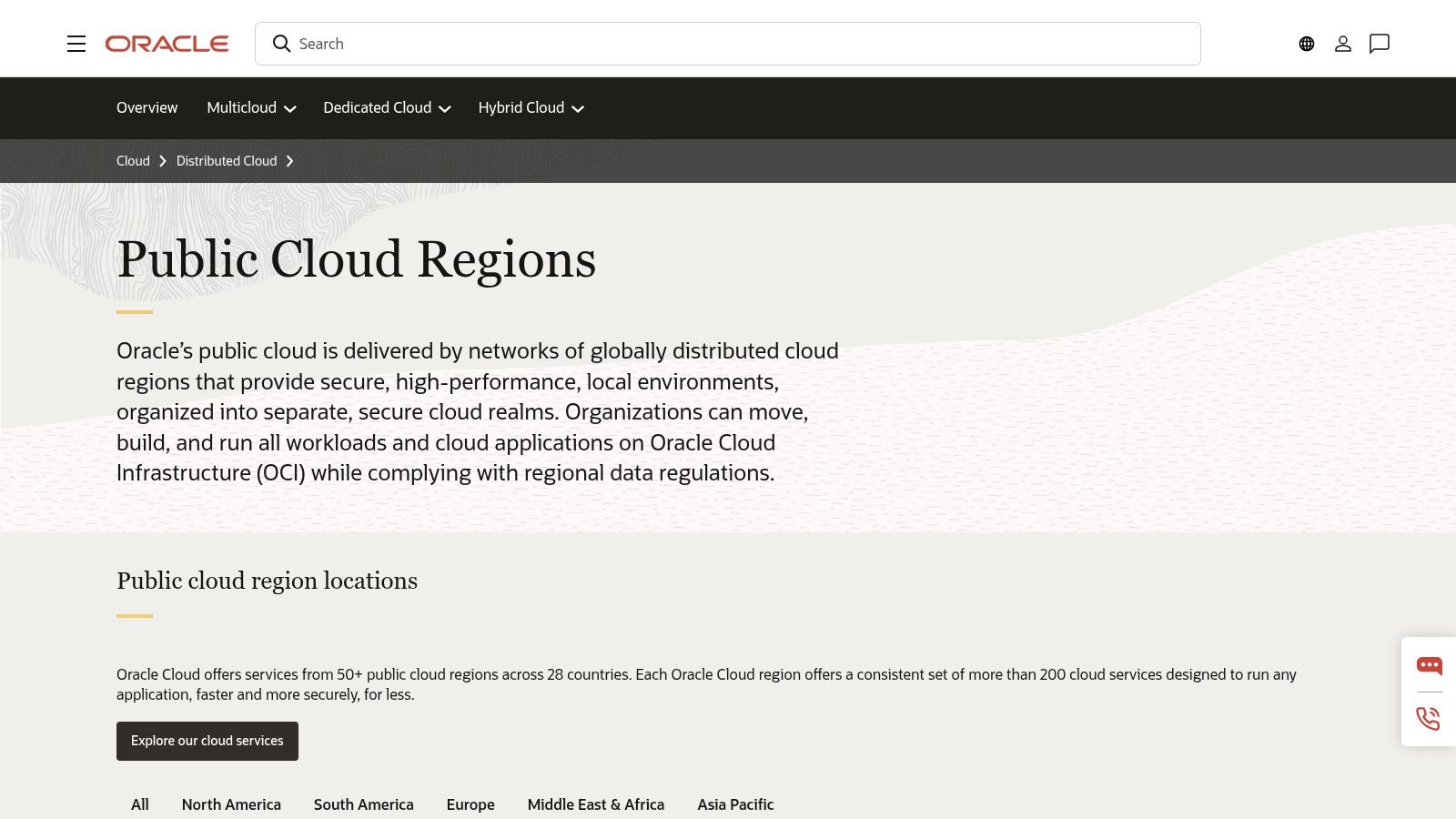
New users also receive a US$300 credit to explore paid services for 30 days. The platform itself is a full-featured enterprise cloud, which can be a double-edged sword; it's powerful but also significantly more complex to navigate than a typical VPS-focused provider.
Practical Considerations & Limitations
The primary appeal of Oracle's offering is its price point: zero. However, this comes with important caveats. The Always Free resources are subject to availability, and it's not uncommon to encounter "host capacity" errors when trying to provision a new instance, which can be frustrating. The free instances are also locked to your designated home region and have modest performance specs. Moving to a paid plan requires a deliberate upgrade, so there's no risk of an accidental bill, but the complexity of the Oracle Cloud ecosystem can present a steep learning curve for those accustomed to simpler VPS control panels. It is an unmanaged service where you are entirely responsible for security and server administration.
- Best For: Developers and hobbyists needing a free sandbox environment or running tiny, non-critical applications.
- Pros: Genuinely free for qualifying resources, enterprise-grade infrastructure, Australian data centre presence.
- Cons: Complex interface for beginners, free resource availability can be limited, steep learning curve.
- Website: oracle.com/au/cloud
9. Contabo
For projects where raw resource allocation is the top priority, Contabo has carved out a niche as one of the most aggressive cheap VPS providers on the market. The German-based company offers a global footprint, including a Sydney data centre, making its high-spec plans accessible to Australian users. Its main appeal lies in providing an exceptional amount of RAM, CPU cores, and storage for the price, often dwarfing what competitors offer in the same tier. This makes it an attractive option for running storage-heavy applications, multiple low-traffic websites, or development environments where generous specs are more important than top-tier network performance.
The platform provides a choice between standard Cloud VPS plans and dedicated Storage VPS plans, both featuring large NVMe storage allotments and huge outbound traffic allowances. While the core pricing is in Euros, the value proposition holds up even after conversion and the addition of a location fee for the Sydney data centre.
Practical Considerations & Limitations
Contabo’s model is built on providing massive resources at a low cost, but this can come with trade-offs. Some users report network performance can be inconsistent during peak times, a common issue with budget providers that may oversell resources. Customer support responsiveness has also received mixed reviews, so you should be prepared to be self-sufficient. Remember that this is an unmanaged service, placing the responsibility for security, updates, and software configuration squarely on you. The high resource-to-price ratio is compelling, but if you need guaranteed network consistency and responsive support for a critical business site, a more performance-focused provider might be a safer bet.
- Best For: Users needing maximum RAM, CPU, and storage on a tight budget for non-critical applications.
- Pros: Exceptional specifications for the price, very generous traffic allowances, Australian data centre available.
- Cons: Mixed reports on network performance and support, location fees apply for Australian hosting.
- Website: contabo.com
10. Leaseweb
For businesses seeking a global Infrastructure-as-a-Service (IaaS) provider with a solid Australian presence, Leaseweb is a strong contender. With a data centre in Sydney, it offers a range of public cloud and VPS options that benefit from a reputable, enterprise-grade global network. This makes it a dependable choice for agencies or businesses that might need to scale beyond a simple VPS, potentially mixing virtual servers with dedicated or bare metal infrastructure in the future.
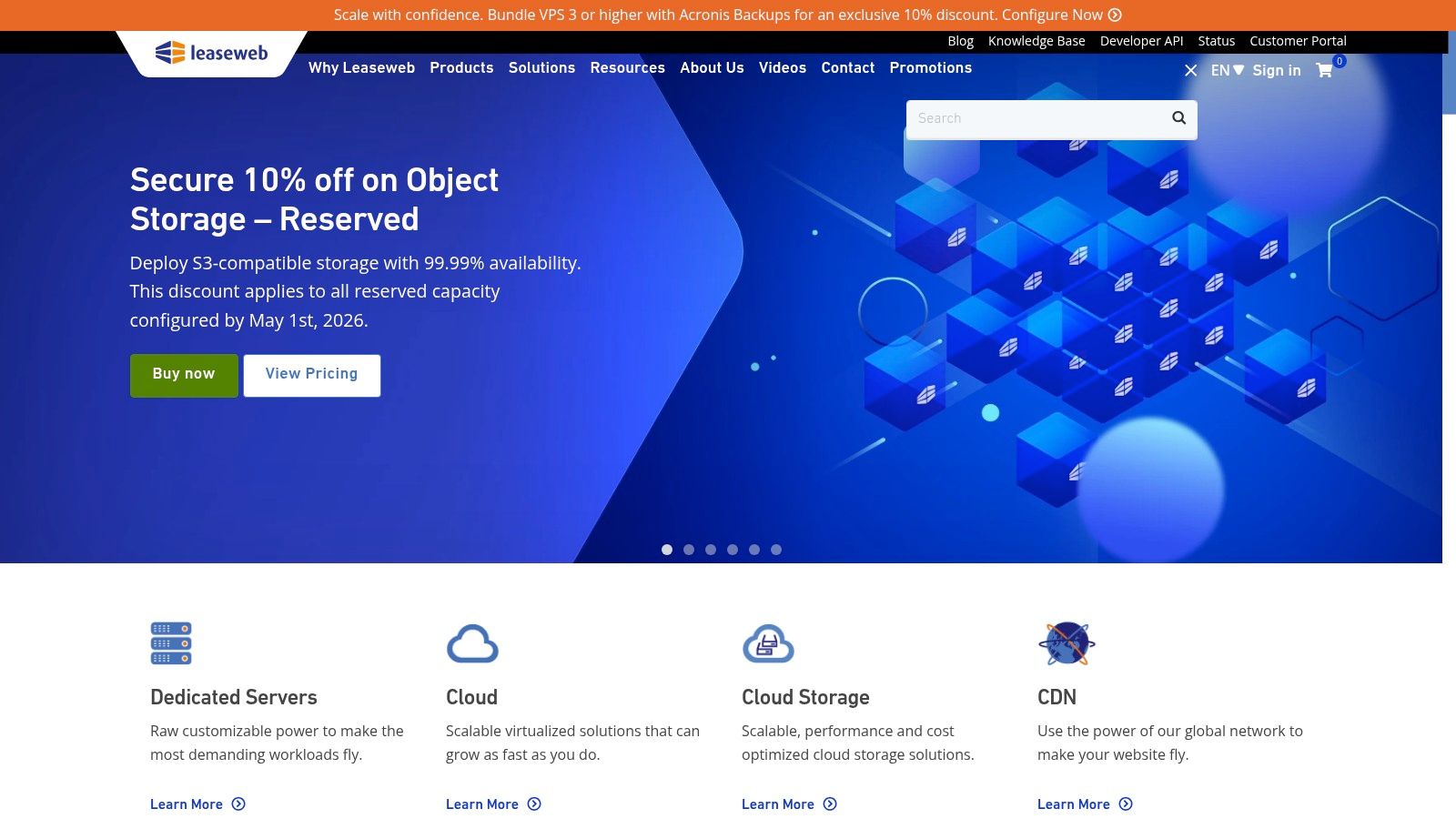
Leaseweb provides a good selection of instance types, allowing you to choose a configuration that fits your workload. The platform also extends beyond pure compute, offering integrated object storage and CDN options, which can simplify building more complex applications. This ability to grow within a single provider’s ecosystem is a key advantage for companies with a long-term growth plan.
Practical Considerations & Limitations
While Leaseweb is a powerful and reliable provider, it may not fit the "ultra-budget" category when compared to some other cheap VPS providers on this list. Its pricing reflects its enterprise heritage and the quality of its network, which can be slightly higher than bare-bones hosts. Some of the more advanced or customised services may also require a quote-based sales process rather than an instant, click-to-deploy setup. This is an unmanaged service, so you will be responsible for all server administration, security patching, and software configuration.
- Best For: Agencies and businesses needing a mix of VPS and dedicated servers from a global provider with a Sydney data centre.
- Pros: Well-known global provider, solid network with an Australian presence, good for hybrid infrastructure needs.
- Cons: Pricing can be higher than budget-focused hosts, some services may be quote-based.
- Website: leaseweb.com
11. OVHcloud VPS
OVHcloud is a global cloud infrastructure provider that offers an aggressively priced VPS range, making it a compelling option for those seeking cheap VPS providers. While it's a French company, it maintains a dedicated Australian product page and offers services from its Sydney data centre, aiming to provide strong performance for local users. The pricing structure is straightforward, with tiered plans from Starter to Elite, offering a clear progression in resources. This makes it a solid contender when you need a balance between cost and performance from a large, established player.
Its self-service control panel and available APIs appeal to developers and system administrators who prefer to manage their own environments. OVHcloud also stands out for its generous bandwidth policies, often including unmetered inbound traffic and competitive allowances for outbound data, which can be a significant cost saver for data-intensive applications.
Practical Considerations & Limitations
The primary challenge with OVHcloud for the Australian market has been fluctuating stock levels. At times, the popular Sydney-based VPS plans can be unavailable, forcing users to either wait or choose a different region, which defeats the purpose of seeking low latency in Australia. The company has also made price adjustments to some plans in the past, so it's wise to review current pricing carefully. As with other unmanaged VPS offerings, you are entirely responsible for the server's security, software installation, and ongoing maintenance. This hands-on requirement means it's best suited for those with technical confidence.
- Best For: Technically proficient users looking for strong price-to-performance from a global provider, when Sydney stock is available.
- Pros: Generally strong price/performance ratio, simple self-service control panel and APIs, generous data transfer allowances.
- Cons: Sydney availability has been inconsistent, some plans may be out of stock, and prices have been subject to change.
- Website: ovhcloud.com/en-au/vps/
12. Mammoth Cloud
As the sibling company to BinaryLane, Mammoth Cloud offers a similarly robust, Australian-owned cloud VPS solution with a focus on stability and clear, predictable service. Operating out of Sydney, it’s an excellent choice for small businesses that need a dependable local server for their operations, whether for hosting internal applications, a company website, or a Windows Remote Desktop environment. Its straightforward monthly billing and clear inclusions make it a reliable option for those who prefer planning their IT budget without the complexities of hourly usage calculations.

Mammoth Cloud stands out by offering both Linux and Windows VPS plans, a key differentiator for businesses reliant on Microsoft-specific software. All plans include weekly full-disk backups, providing a crucial safety net for your data. The support team is also based in Australia, ensuring you get knowledgeable assistance during local business hours. Upgrading resources like RAM, disk space, or data transfer is a simple à-la-carte process, allowing the server to grow with your business needs.
Practical Considerations & Limitations
While Mammoth Cloud provides a solid, no-fuss service, it’s not designed to compete on price with the absolute cheapest global providers. Its value lies in its local presence, reliable performance, and simplified management. Much like other unmanaged VPS options, you are fully responsible for server administration, including all software installation, security patching, and ongoing maintenance. The ecosystem of integrated services is smaller than what you’d find with hyperscale clouds. If you need a more hands-off approach for a WordPress site, where updates and security are managed for you, a specialised WordPress hosting plan would be a more suitable and time-saving investment.
- Best For: Small businesses needing a stable, Australian-based Linux or Windows server with predictable monthly costs.
- Pros: Local Australian provider and support, offers Windows VPS, clear upgrade paths and inclusions.
- Cons: Not the cheapest option on the market, limited managed cloud add-ons.
- Website: mammoth.com.au
12 Cheap VPS Providers Comparison
| Provider | Core features ✨ | Quality ★ | Price/Value 💰 | Target audience 👥 | Standout 🏆 |
|---|---|---|---|---|---|
| BinaryLane | Sydney region, NVMe, hourly billing, automated backups | ★★★★☆ local AU support & simple panel | 💰 Very low AU starting cost; modest bandwidth on smallest | 👥 AU small businesses & WordPress sites | 🏆 Local AU‑centric control/API |
| Vultr | SYD region, multiple compute tiers, marketplace & ISOs | ★★★★☆ predictable instances; self‑service support | 💰 Mid‑range; add‑ons (backups/egress) raise costs | 👥 Developers needing multi‑region deploys | 🏆 Broad global footprint + fast deploys |
| Linode (Akamai) | 1 GB Nanode (~US$5), Sydney, simple pricing, docs | ★★★★☆ longstanding reputation & community docs | 💰 Excellent value at small sizes; generous egress | 👥 Devs/SMBs seeking predictable low‑cost VPS | 🏆 Honest, simple pricing |
| DigitalOcean | SYD1, Droplets, Managed DB/K8s/Spaces, tutorials | ★★★★★ extremely beginner‑friendly & docs | 💰 Predictable Droplet pricing; managed add‑ons cost extra | 👥 Beginners, startups & agencies | 🏆 Rich ecosystem & tutorials |
| UpCloud | AU‑SYD1, strong disk I/O, hourly billing, private networking | ★★★★☆ consistent I/O & transparent billing | 💰 Great price/perf for I/O‑sensitive workloads | 👥 I/O‑intensive apps & performance‑minded teams | 🏆 Very consistent disk I/O per $ |
| Kamatera | Sydney NVMe, highly granular configs, marketplace | ★★★★☆ enterprise flexibility; UI less newbie‑friendly | 💰 Granular pricing; consistent across regions | 👥 Enterprises needing custom servers | 🏆 Extremely configurable hourly billing |
| Amazon Lightsail | Flat monthly bundles, Sydney, snapshots & simple AWS integration | ★★★★☆ predictable bills; broad AWS docs | 💰 Simple bundle pricing; APAC transfer caveats | 👥 Users wanting easy AWS‑adjacent VPS | 🏆 Easiest gateway into AWS services |
| Oracle Cloud (Always Free) | Australia East, Always Free micro shapes + US$300 trial | ★★★☆☆ excellent free value; capacity limits possible | 💰 Effectively $0 for qualifying micro instances | 👥 Tiny sites, staging, learning/testing | 🏆 Generous Always Free tier |
| Contabo | Sydney, very high RAM/storage per dollar, large outbound allowances | ★★★☆☆ top specs per $; mixed support reports | 💰 Exceptional specs‑for‑dollar; AU location fees apply | 👥 Storage‑heavy projects & budget users | 🏆 Best raw specs per $ on large plans |
| Leaseweb | Sydney Public Cloud & VPS, enterprise network, bare metal | ★★★★☆ enterprise reliability; higher pricing | 💰 Enterprise pricing; good SLAs | 👥 Agencies & enterprises needing hybrid infra | 🏆 Reputable global network & dedicated options |
| OVHcloud VPS | AU VPS page, tiered plans, unmetered inbound | ★★★☆☆ solid price/perf; stock can fluctuate | 💰 Aggressive pricing; SKU/stock variability | 👥 Price‑sensitive users wanting simple VPS | 🏆 Competitive price/perf when in stock |
| Mammoth Cloud | AU Linux/Windows VPS, weekly backups, AU‑based support | ★★★★☆ local support & clear inclusions | 💰 Modestly priced; not the absolute cheapest | 👥 Small businesses needing AU presence | 🏆 Local provider with clear upgrade pricing |
Final Thoughts
Navigating the world of cheap VPS providers can feel like a complex task, especially for Australian businesses trying to balance cost, performance, and local presence. Throughout this guide, we've explored a diverse range of options, from global giants like Vultr and Linode to more specialised providers like BinaryLane, which offers a distinct Australian focus. The central theme is clear: "cheap" does not have to mean "low quality". However, it almost always means you are taking on more responsibility.
The primary takeaway is that the "best" cheap VPS provider is entirely dependent on your specific situation. A developer spinning up a test environment will have vastly different needs from a small e-commerce store in Perth that requires low latency for local customers. Your technical confidence, budget, and performance requirements are the three pillars that should guide your final choice. Providers like DigitalOcean and Linode offer a fantastic balance of performance, documentation, and usability, making them excellent starting points for those new to unmanaged hosting. Meanwhile, contenders like UpCloud push the boundaries of storage performance, and Oracle’s Always Free tier presents a compelling, if complex, option for non-critical projects.
Key Considerations Before You Commit
Before you hand over your credit card details, it’s crucial to synthesise the information and apply it to your business. Let’s recap the most important decision-making factors:
- Your Technical Skill Level: This is the most significant factor. Unmanaged VPS hosting places the responsibility for security, updates, backups, and software installation squarely on your shoulders. If you are not comfortable working with a command line, troubleshooting server errors, or configuring a firewall, the initial savings can be quickly erased by downtime or security breaches.
- Performance vs. Price: While all the providers on our list are affordable, there is still a spectrum. Contabo, for instance, offers incredible resources for the price, but performance can be less consistent than a premium provider like Vultr. You need to decide where your priority lies. For a high-traffic WordPress site, consistent CPU and I/O performance are non-negotiable.
- Data Centre Location: For Australian businesses, latency matters. Serving your website from a data centre in Sydney or Melbourne will provide a noticeably faster experience for your local customers compared to one in Europe or North America. BinaryLane, Vultr, Linode, and DigitalOcean all offer strong Australian presences, making them top contenders for local businesses.
- Scalability: Consider your future growth. How easy is it to upgrade your server's resources? Most providers we've reviewed make this a straightforward process, but it's an important logistical element to confirm. You want a provider that can grow with you, not one you’ll outgrow in six months.
Choosing one of these cheap VPS providers is an excellent move toward gaining more control and performance for your WordPress site. It allows you to step away from the limitations of shared hosting and build a server environment configured precisely for your needs. The journey requires a hands-on approach, a willingness to learn, and a clear understanding of the responsibilities involved. By carefully weighing your options based on the insights provided, you can find a powerful and affordable hosting solution that sets your business up for success.
If the prospect of managing server security, WordPress updates, and performance optimisation feels daunting, you're not alone. The time and expertise required can detract from what you do best: running your business. Instead of going it alone, let Webby Website Optimisation manage the technical complexities for you with our specialised WordPress support and optimisation services. We can ensure your website runs on a perfectly tuned, secure, and fast platform, freeing you to focus on growth.