
Asking "how much does a website cost?" is a bit like asking "how much is a car?". A simple runabout and a high-performance sports car will both get you from A to B, but their purpose, features, and price tags are worlds apart. It’s the same with websites. A basic online brochure might start around $3,000, while a complex e-commerce store with all the bells and whistles can easily soar past $30,000.
Ultimately, the final price comes down to what you need your website to do for your business.
Decoding Australian Website Design Costs
Getting a handle on the typical investment is the first real step in planning your new website. For most Aussie small to medium businesses, the numbers are often more manageable than you might expect. Think of it less as an expense and more as a crucial investment in your brand's growth and online credibility.
Typical Cost Brackets
So, what should you actually budget? For a professionally built website in Australia, most small and medium businesses can expect to invest somewhere between $5,000 and $25,000. This range is a common sweet spot for a solid, 5-10 page WordPress site that gets the job done right.
This bracket covers everything from a sharp, foundational website that puts you on the map, right through to more sophisticated platforms built for generating leads and driving sales. To see where your project might fit, it helps to break down the costs by common website types.
For a deeper dive into the numbers, check out our complete guide on how much a website costs in Australia.
A Quick Price Snapshot
The table below gives you a ballpark idea of what to expect for the initial, upfront investment. These are general estimates for professionally developed WordPress websites here in Australia. Keep in mind that the final figure will always shift based on your specific needs, the complexity of the design, and the overall scope of the project.
Estimated Initial Website Design Costs in Australia
A quick look at typical upfront investment ranges for different types of professional WordPress websites for Australian businesses.
| Website Type | Typical Page Count | Estimated Cost Range (AUD) |
|---|---|---|
| Small Business/Brochure Website | 5-10 pages | $3,000 – $8,000+ |
| Corporate/Lead-Gen Website | 10-25 pages | $8,000 – $20,000+ |
| Small E-commerce Store | 10-50 products | $7,000 – $25,000+ |
| Large/Custom E-commerce Site | 50+ products & custom features | $25,000 – $50,000+ |
The main takeaway here is to align your investment with your business goals. A straightforward site is perfect for showcasing your services and building trust. On the other hand, a larger budget is essential if you need a platform that can handle complex online sales, custom user functions, and third-party software integrations.
Getting this clear from the outset helps set realistic expectations before you start getting detailed quotes.
The Three Main Website Pricing Models Explained
Before you can figure out a realistic budget for your new website, you need to get your head around how agencies and freelancers actually charge for their work. It’s a bit like hiring a builder—different professionals have different ways of quoting, and each model suits a certain type of job. Understanding the main approaches is the key to comparing quotes properly and picking the right partner for your project.
Each pricing structure comes with its own set of pros and cons, which really depend on how clear your project is, how much flexibility you need, and what your long-term goals are. Let's walk through the three most common ways you'll see website projects priced in Australia.
Fixed-Price Projects
A fixed-price (or project-based) model is as straightforward as it gets. You agree on one total cost for a very specific scope of work, and that's the price you pay. Think of it like getting a firm quote to build a deck—you know exactly what you’re getting and what the final bill will be before the first nail is hammered.
This model is perfect for projects where you have a crystal-clear vision. If you know you need a five-page website with a contact form, an image gallery, and your specific branding applied, a fixed price gives you complete budget certainty. No nasty surprises.
The catch? This approach hinges on a clearly defined outcome. If you decide you want to add a whole new section halfway through—what we call "scope creep"—it'll almost always require a new quote for the additional work.
The biggest win here is predictability. It makes budgeting a breeze. On the flip side, it can be a bit rigid. If you have a brilliant new idea mid-stream, you'll have to pause and renegotiate, which can slow things down.
Hourly Rate Billing
Working with an hourly rate is a lot like calling in a specialist tradie, like a sparky or a plumber. You're paying for their time and expertise at an agreed-upon rate, usually billed in blocks of hours.
This approach gives you the most flexibility, making it ideal for a few specific scenarios:
- Ongoing jobs: Small tweaks, bug fixes, or adding minor features over time.
- Vague scopes: When you’re not 100% sure what the final product will look like and expect things to evolve.
- Strategic advice: When you just need an expert to consult with.
In Australia, hourly rates can swing wildly, from around $80/hour for a junior freelancer to $200+/hour or more for a seasoned developer at a top agency. The most important thing here is transparency. You should expect detailed timesheets and frequent check-ins to see where your money is going. While it's super flexible, the final website design cost can be a moving target if the project scope blows out.
Monthly Retainers
A monthly retainer is essentially a subscription for web expertise. You pay a set fee every month, and in return, you get a certain number of hours or a specific list of ongoing services. It’s the best model for businesses that see their website not as a one-and-done project, but as a living asset that needs constant attention.
It’s like having a property manager for your digital shopfront. To get a feel for how different services package this, you can explore common pricing models in the wider market.
A good retainer usually covers all the essentials, like:
- Regular software updates and security scans.
- Performance checks to keep your site running fast.
- Content updates and small design changes.
- Priority support when you need it.
This proactive approach stops small issues from becoming big, expensive disasters. It shifts the relationship from a one-off transaction to a genuine partnership focused on keeping your website healthy and effective. For those wanting to get online quickly without the massive upfront cost, a service like our Website Built in a Day is a great launchpad, after which a retainer makes perfect sense for ongoing care.
So, What Actually Influences Your Final Website Cost?
Ever wondered why one website quote comes in at $5,000 while another, for what looks like a similar site, hits $50,000? It’s not random guesswork. The final price tag is a direct result of the choices you make during the planning phase. Getting your head around these key factors is the best way to set a realistic budget and ensure the website you end up with actually helps your business grow.
Think of it like building a house. You can build a project home or an architecturally designed masterpiece. The final cost depends on the size, the quality of the materials, whether you want custom joinery, or high-end European appliances. A website is exactly the same. Every decision, from the look and feel to the tech that powers it, adds to the total investment.
Let's break down the main cost drivers.
Custom Design vs. Templates
One of the first big decisions you'll make is whether to use a pre-built template or go for a completely custom design. This choice has a huge impact on the final cost.
A template is a bit like buying a display home. It's already designed, looks fantastic, and has a proven layout. It’s a brilliant way to get a professional-looking site up and running quickly without a massive budget.
A custom design, on the other hand, is like hiring an architect. Every single pixel, every user interaction, and every page is designed from scratch, specifically for your brand and your customers. This gives you a truly unique website that can provide a real competitive edge, but it naturally requires a much bigger investment in time from designers and developers.
- Templates: A faster and more affordable option, perfect for businesses that need a polished online presence without breaking the bank.
- Custom Design: A unique, brand-focused experience that’s built to scale and optimised for your specific business goals, carrying a higher upfront cost.
Complexity of Features and Functionality
Beyond the visuals, it’s the website's "engine room"—the features and functionality—that really drives the cost. A simple five-page brochure website with just text and images is pretty straightforward. But the moment you start adding more complex tools, you start adding development hours, and that’s where the costs climb.
Think of your website as a toolbox. A basic site gives you a hammer and a screwdriver. As you start adding specialised power tools, the cost of the toolbox goes up.
A website's functionality is a direct investment in your business's efficiency and your customer's experience. A custom booking system that saves your admin team five hours a week pays for itself very quickly.
Here are a few common features that can increase the scope and budget:
- Online Booking Systems: Integrating a calendar to handle appointments or reservations automatically.
- Membership Portals: Creating a private, members-only section with exclusive content.
- Advanced Forms: Building out multi-step quizzes, cost calculators, or detailed enquiry forms.
- Real Estate Listings: Developing a system with advanced search filters and map integration.
Each of these requires serious development expertise to make sure they're secure, easy to use, and don't slow your site down.
E-commerce Capabilities
If you want to sell products online, you're stepping into the world of e-commerce, and that brings a whole new level of complexity. An online store is so much more than a "Buy Now" button. It’s a complete ecosystem of features that all need to be built, configured, and tested rigorously.
The size and scope of your e-commerce plans will have a massive say in the final price. A small shop with 10 simple products is one thing. A huge catalogue with thousands of items, product variations, complex shipping rules, and live inventory management is a completely different beast.
Key e-commerce cost factors usually include:
- Payment Gateway Integration: Securely connecting your site to process payments through services like Stripe, PayPal, or eWay.
- Product Management: The sheer number of products and their complexity (e.g., different sizes, colours, and other options).
- Shipping and Tax Rules: Setting up complicated calculations based on a customer's location, product weight, and other variables.
- Customer Accounts: Letting users create accounts to view their order history and save their details for next time.
A well-built e-commerce platform is a powerful sales machine, but getting it right requires specialised skills and a budget to match.
Content Creation and SEO Foundations
A website is just an empty shell until it’s filled with great content. This is an area where people often underestimate the time and cost involved. You can, of course, write the text and source the images yourself, but investing in professional help here pays off massively.
Professional copywriting makes sure your message is clear, persuasive, and speaks directly to your ideal customer. Just as importantly, it ensures the content is written with search engines in mind. This brings us to SEO (Search Engine Optimisation). A basic SEO setup gets the technical foundations right so Google can find and understand your site.
A cheap website with no thought given to SEO is like opening a beautiful new retail store on a street with no name. Investing in content and SEO from the very beginning means your website won’t just look good—it will actively work to bring you new customers from day one.
Budgeting for Ongoing Website Maintenance Costs
Your brand-new website is live. That's a fantastic milestone, but it's really the starting line, not the finish. It’s easy to get tunnel-vision on the upfront design cost and completely forget that a website is a living, breathing asset that needs regular care to keep performing.
Ignoring ongoing costs is like buying a shiny new car and never putting aside money for petrol, insurance, or a regular service. Sooner or later, you’ll be stranded on the side of the road. Thinking about these recurring costs from day one is the smartest way to protect your investment and keep your digital presence healthy.
These expenses ensure your site stays secure, fast, and functional, stopping small glitches from snowballing into expensive emergencies that could seriously hurt your reputation and sales.
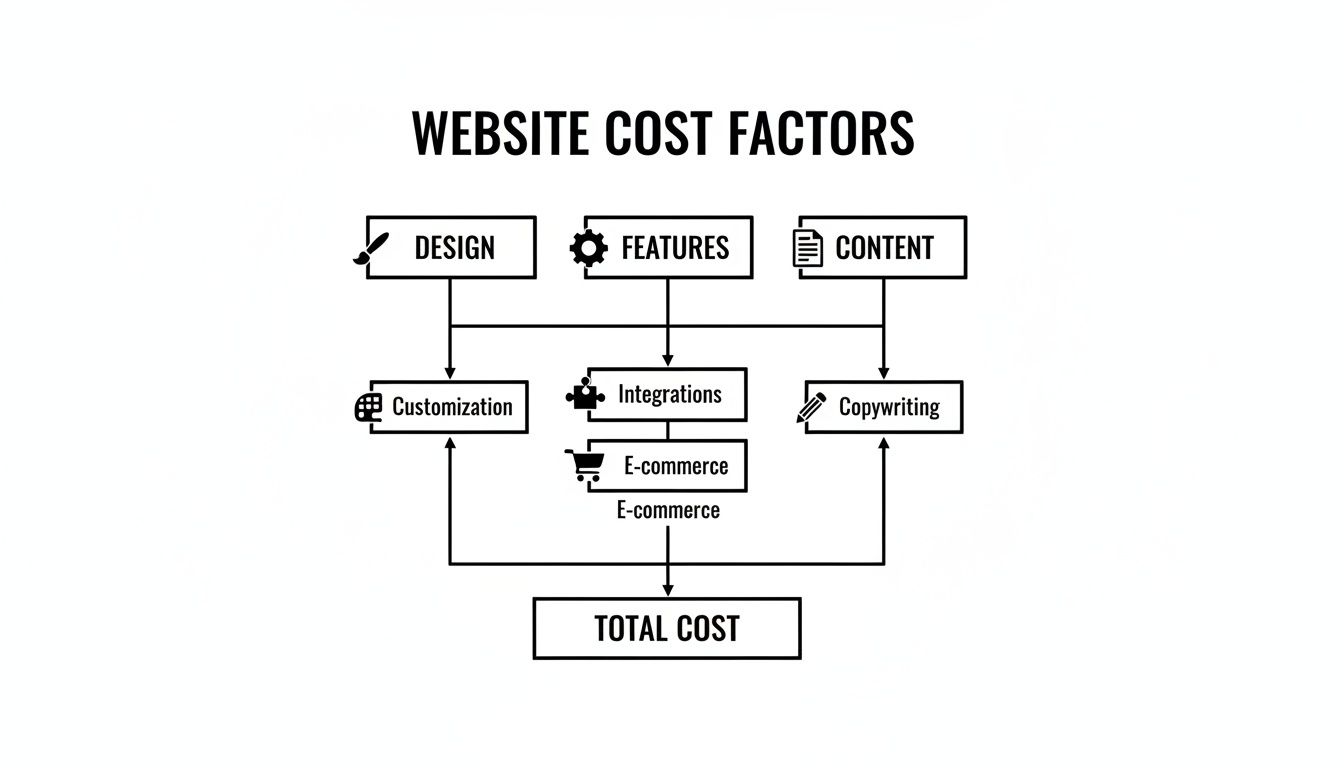
As you can see, the initial build is a mix of many moving parts. Keeping them all working together harmoniously requires an ongoing strategy.
Core Recurring Expenses
At the very least, every single website has a few non-negotiable running costs. These are the absolute fundamentals that keep your site visible and accessible to the world.
- Domain Name Renewal: This is the small annual fee you pay to keep your website address (like
yourbusiness.com.au). It’s usually only $20 - $50 per year, but forgetting to renew it can be catastrophic for your business. - Website Hosting: Think of this as the rent you pay for your little patch of land on the internet. It's the service that stores all your website files and makes them available online. Costs can range from cheap shared hosting to premium managed services.
- SSL Certificate: This is what puts the little padlock next to your URL in the browser. It encrypts data, builds trust with visitors, and is a non-negotiable for security. Many good hosts include this, but it's vital to check.
Without these three things, your website simply doesn't exist online. They're the absolute bare minimum.
The Real Value of a Professional Maintenance Plan
Beyond the basics, the single most important ongoing investment is a professional maintenance plan. A well-built WordPress website is an ecosystem of different software—the WordPress core, a theme, and a bunch of plugins. All of these need constant updates to stay secure and play nicely together.
A proactive maintenance plan is your website's insurance policy. It's a modest monthly investment that helps you avoid the massive, unexpected costs of a security breach, data loss, or a critical site failure.
Without one, you’re basically leaving the front door open for hackers, who actively hunt for sites running outdated software. A proper maintenance service, like the ones we offer at Webby, handles all this tedious but critical work for you. It's pure peace of mind.
Here’s a look at what a good plan should cover:
- Software Updates: Keeping your WordPress core, theme, and all plugins updated to patch security vulnerabilities and fix bugs.
- Security Scanning: Actively monitoring for malware and suspicious activity to stop threats before they can do any damage.
- Regular Backups: Taking daily or weekly copies of your entire website and storing them somewhere safe. If the worst happens, you can restore a clean version in a flash.
- Performance Optimisation: Making sure your site continues to load quickly, which is crucial for user experience and your Google rankings.
After spending thousands on a brilliant new site, it just makes sense to protect that asset. Below is a table outlining the typical recurring costs you should factor into your annual budget.
Typical Ongoing Annual Website Costs
| Service | Estimated Annual Cost (AUD) | Why It's Essential |
|---|---|---|
| Domain Name | $20 – $50 | Your web address. Non-negotiable. |
| SSL Certificate | $0 – $150 | Secures data and builds visitor trust. Often included with hosting. |
| Website Hosting | $150 – $600+ | The "rent" for your website's online space. Quality varies hugely. |
| Professional Maintenance Plan | $600 – $2,500+ | Proactive security, updates, backups, and performance monitoring. |
| Premium Plugin Licences | $100 – $500+ | Annual fees for any premium tools used for forms, SEO, etc. |
| Content & SEO Work | $2,000 – $15,000+ | Optional but vital for growth. Includes blogging, link building, etc. |
Ultimately, budgeting for maintenance isn't just another cost. It’s a strategic decision to ensure the money you invested in your website continues to deliver returns for years to come. It frees you up to focus on running your business, knowing your digital storefront is secure, fast, and always ready for customers.
How to Get an Accurate and Transparent Website Quote
Getting a vague, one-line quote for a new website should set off alarm bells. To get a real sense of what your website will cost and find the right partner, you need to give them a clear picture of what you’re trying to achieve.
Think of it like getting quotes for a kitchen reno. You wouldn't just ask for "a new kitchen." You’d talk about the layout, the type of benchtops, the appliances you need, and the overall style. It’s the exact same principle here. The more detail you give upfront, the more accurate and transparent the quotes will be.
A bit of prep work now saves a world of headaches later – things like scope creep, hidden fees, and frustrating misunderstandings.
Create a Detailed Project Brief
A project brief is your best tool for getting clear, comparable quotes. It’s essentially a document that lays out everything a web design agency needs to know about your business, your customers, and your goals for the website.
Don't worry, it doesn't need to be super technical. It just needs to be thorough. This brief becomes the single source of truth for the project, making sure everyone is on the same page from day one. It helps agencies give you a proper estimate, which protects your budget and respects their time.
Here's what you should absolutely include:
- About Your Business: A quick rundown of who you are, what you do, and what makes your business special.
- Your Project Goals: What does this website need to do? Generate leads? Sell products? Build your brand? Get specific. For example, "increase online enquiries by 20% within six months."
- Your Target Audience: Describe your ideal customer. What are their biggest problems? What are they hoping to find on your site?
- Must-Have Features: Make a list of the non-negotiables. This could be anything from an online booking system and a blog to a full-blown e-commerce store.
- Design Inspiration: Share links to 3-5 websites you really like. Just as importantly, explain why you like them. This gives designers a feel for your taste.
Key Questions to Ask Potential Partners
Once your brief is out and the proposals start rolling in, it's time to dig a little deeper. A quote is much more than just a number; it’s the start of a relationship. Asking the right questions helps you figure out an agency's experience, their process, and whether they’re genuinely invested in your success.
If you want to see what a transparent and effective partnership looks like in action, you can read about the Webby design and development process.
Here are the critical questions you should be asking every single agency you talk to:
- What’s your design and development process like? You're looking for a clear, structured approach that covers discovery, design, development, and has obvious points for you to give feedback.
- Can I see some examples of similar websites you've built? This is the best way to judge their experience in your industry and the quality of their work.
- What, specifically, is included in this quote? And what isn’t? Make sure to ask about things like content writing, initial SEO setup, and any training after the site goes live.
- How do you handle changes or new requests once the project has started? A good partner will have a straightforward process for managing scope creep and quoting for any additional work.
- What kind of support and maintenance do you offer after launch? This is absolutely crucial for the long haul. And don't forget to budget for security; understanding how much a pentest costs can help you plan for keeping your site secure down the track.
By taking these steps, you shift from just shopping around for the lowest price to being an informed buyer. You’ll be setting your project up for a smooth, transparent, and on-budget launch.
Smart Ways to Manage Your Website Budget Effectively

A high-quality website is a genuine asset for any business, but that doesn't mean you need a massive upfront expense to get started. The good news is that with a bit of smart planning, you can control your website design cost without compromising on quality. A strategic approach lets you launch a professional, effective website that fits your current budget and scales as your business grows.
Thinking about the long game right from the start is the secret to getting real value. Let’s walk through a few practical ways to manage your investment intelligently, making every dollar work harder for you.
Adopt a Phased Launch Approach
You don't need every single bell and whistle on day one. A phased launch, often called a Minimum Viable Product (MVP) approach in the tech world, is one of the smartest ways to manage your budget. It's all about launching with the absolute essentials—the core features that achieve your primary goal, whether that’s generating leads or showcasing your portfolio.
Think of it like building a house. You start with a solid foundation, the main living areas, a kitchen, and a bathroom. Down the track, when time and money allow, you can add the deck, landscape the garden, and build that extra bedroom.
This strategy gets your business online and operating much faster, so your website can start doing its job straight away. Once it begins bringing in revenue or new leads, you can reinvest that back into adding more advanced features. This brilliantly turns one huge cost into a series of smaller, more manageable investments.
Provide Your Own High-Quality Content
Creating content—writing all the text, sourcing images, and producing videos—can chew up a surprising amount of a website project's budget. If you have the time and the skills, supplying your own professionally written copy and high-resolution brand assets is a direct way to lower your final invoice.
When you hand over polished, ready-to-use content, your developer can focus solely on design and technical execution. This saves you billable hours they would otherwise spend on content entry, formatting, and editing.
To make this work for you, make sure your content is:
- Finalised and Proofread: Don't send over rough drafts. Ensure everything is checked and signed off before you hand it over.
- Well-Organised: Label your files clearly and provide the text in a structured document, sorted by the page it belongs on.
- Optimised for Web: Keep paragraphs short and punchy. Use clear headings to break up the text and make it easy for people to scan online.
Build on a Scalable Platform from the Start
Choosing the right foundation for your website is a critical decision that will impact your costs for years to come. It can be tempting to go with a cheap, restrictive website builder for a quick and easy launch, but this often paints you into a corner. Those platforms frequently hit a wall when you need to add custom functionality, integrate with other software, or seriously ramp up your SEO.
Starting with a scalable and flexible platform like WordPress is a much wiser long-term investment. Its enormous ecosystem of plugins and global community of developers means the platform can grow and adapt right alongside your business. This simple choice from the outset helps you avoid a complete, costly, and disruptive rebuild in a few years, saving you a fortune and protecting your initial investment.
Common Questions About Website Design Costs
Thinking about website pricing often brings up a lot of specific questions. To help you budget confidently, we’ve put together some straightforward answers to the questions we hear most from Australian business owners.
Can I Really Get a Good Website for Under $2,000?
It's tempting, but a professionally built website for under $2,000 is almost unheard of in Australia. While DIY builders get you online cheaply, a project at this price point usually means cutting corners. Think restrictive templates and skipping essential steps like business strategy, custom design, and foundational SEO, which ultimately holds back your site's ability to grow and bring in new leads.
Why Do Quotes for the Same Project Vary So Much?
The wide range in quotes often comes down to who you're talking to—their experience, their process, and their overheads. A large agency with a team of specialists will naturally have higher running costs than a solo freelancer working from a home office.
The price difference is also a clue about what’s happening behind the scenes. A higher quote usually means more time is being dedicated to strategy, custom design work, detailed testing, and support after launch. These are the things that truly make a website successful.
Is WordPress a Cheaper Option?
While the core WordPress software is free to use, building a professional business site with it isn't. The real investment is in the expert time needed to design and develop a custom solution. Costs also include premium themes and plugins for specific features, plus the vital ongoing maintenance required to keep it secure and running smoothly.
Do I Need to Pay for Everything Upfront?
Not usually. Most web design agencies in Australia will break the total cost down into milestone payments. A common arrangement is a 50% deposit to get the project started and the final 50% when the site is finished and ready to go live. This helps manage cash flow and shows a fair commitment from both you and the agency.
Your website is one of your most important business assets, and it deserves expert care. Webby Website Optimisation offers complete WordPress support plans to keep your site secure, fast, and performing at its peak. Learn more about our WordPress help and support services.